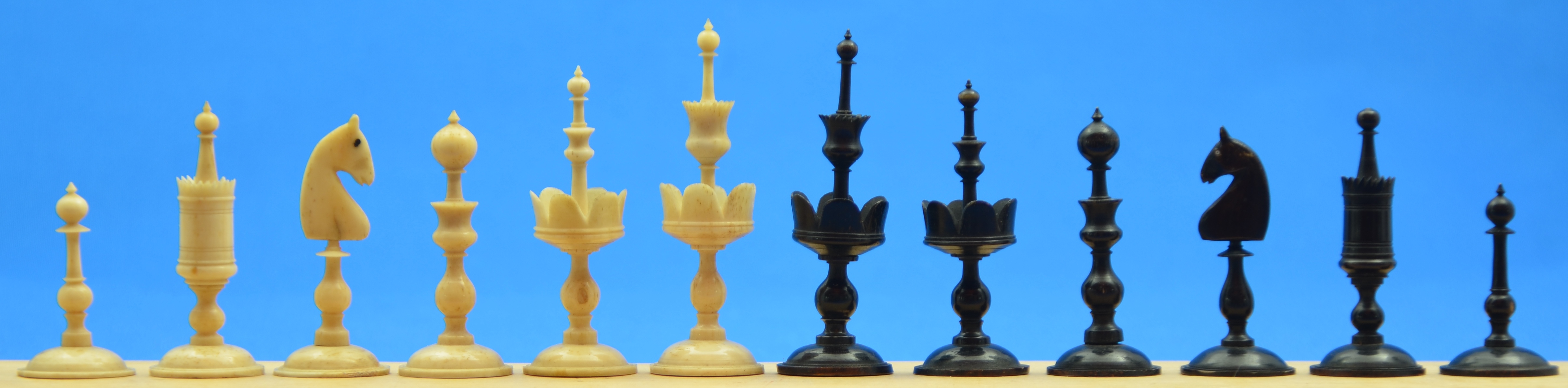
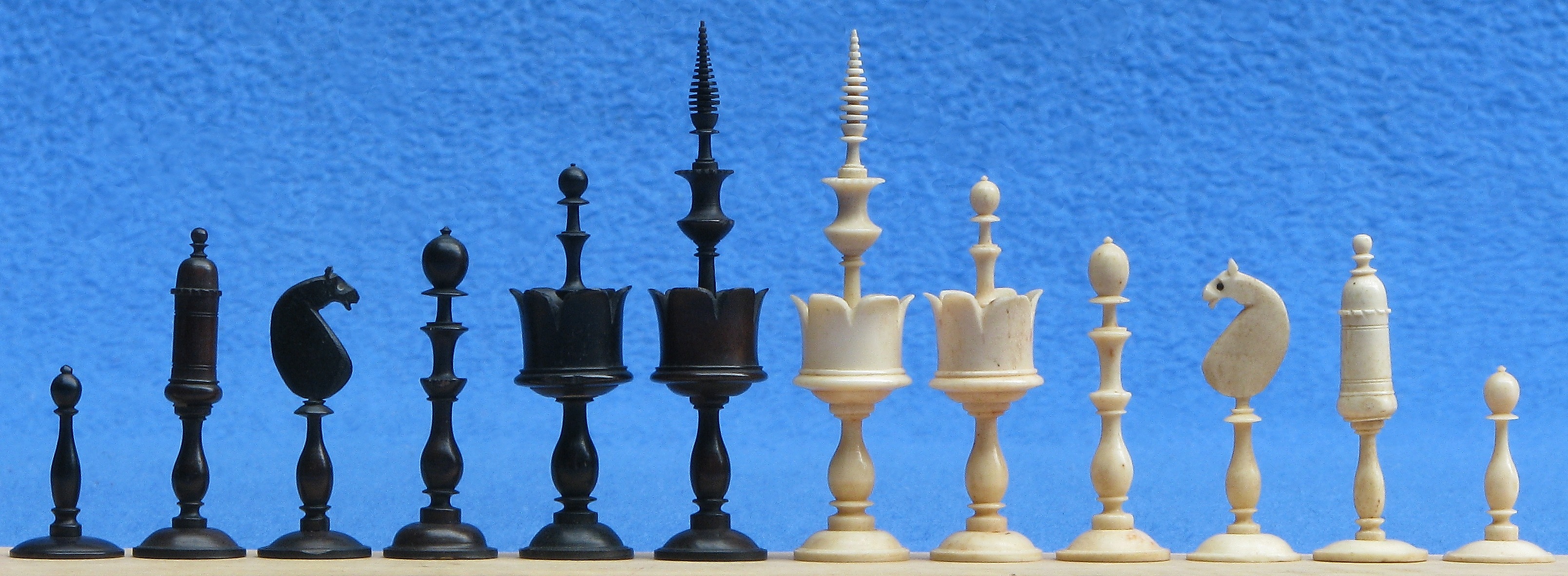
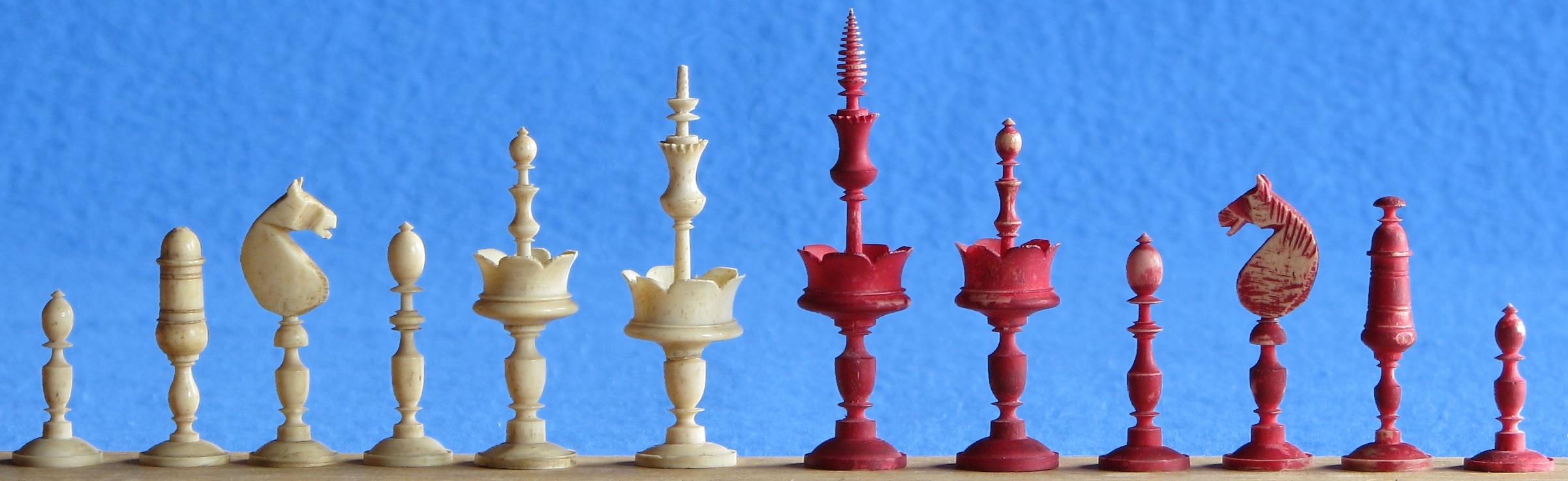
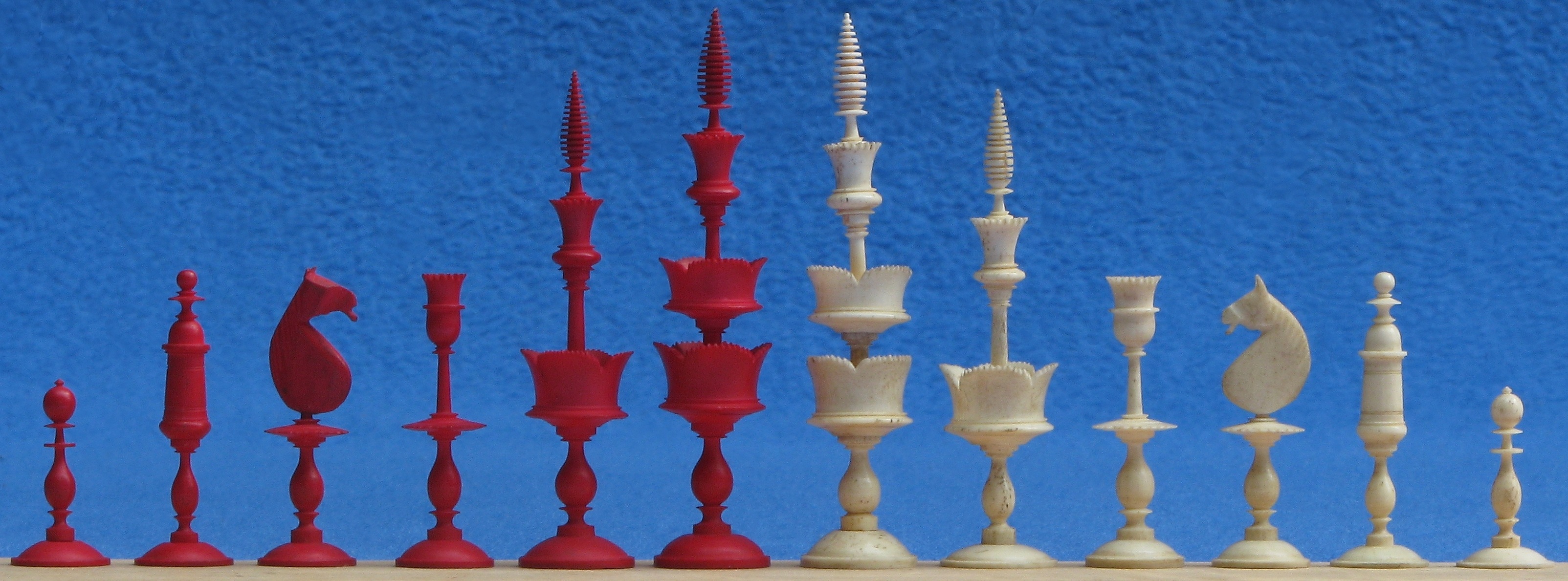
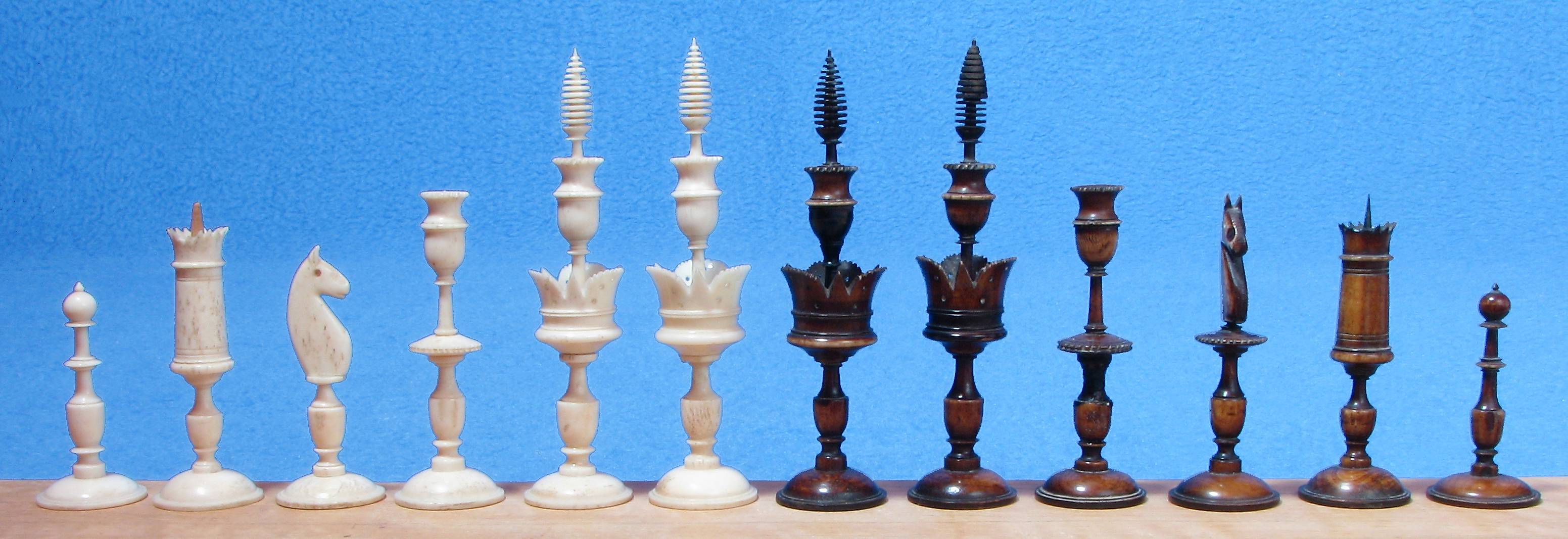
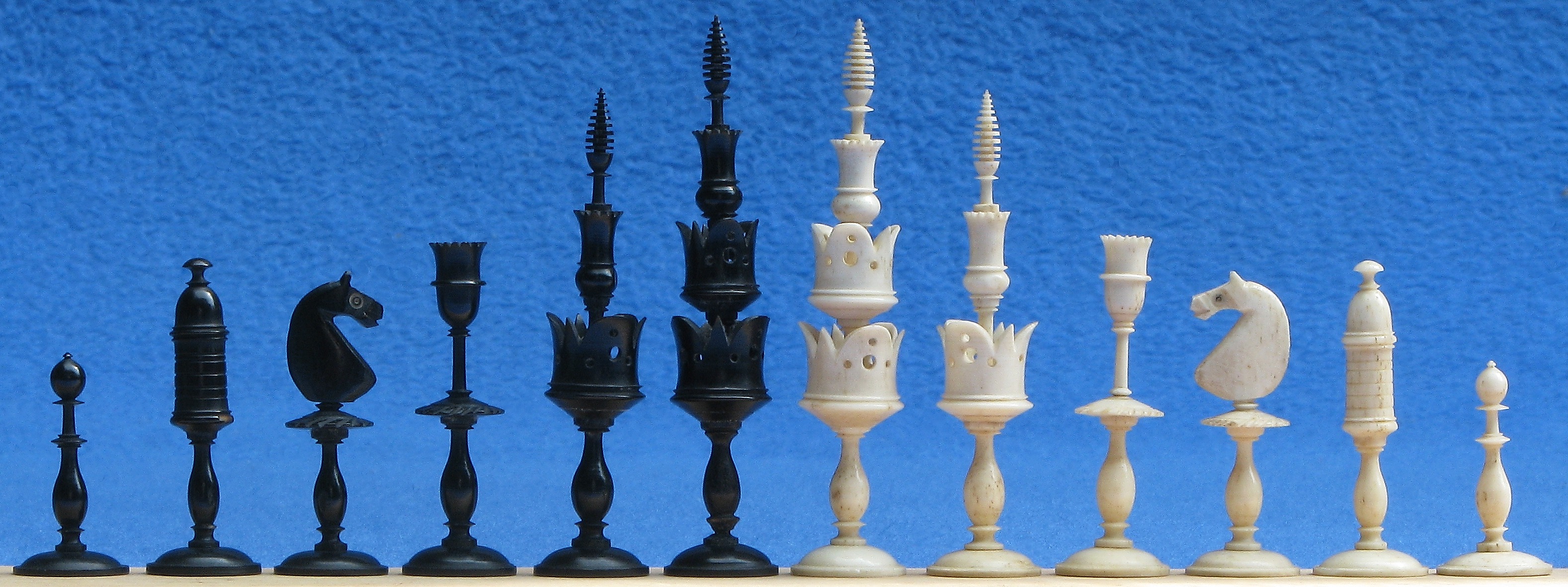
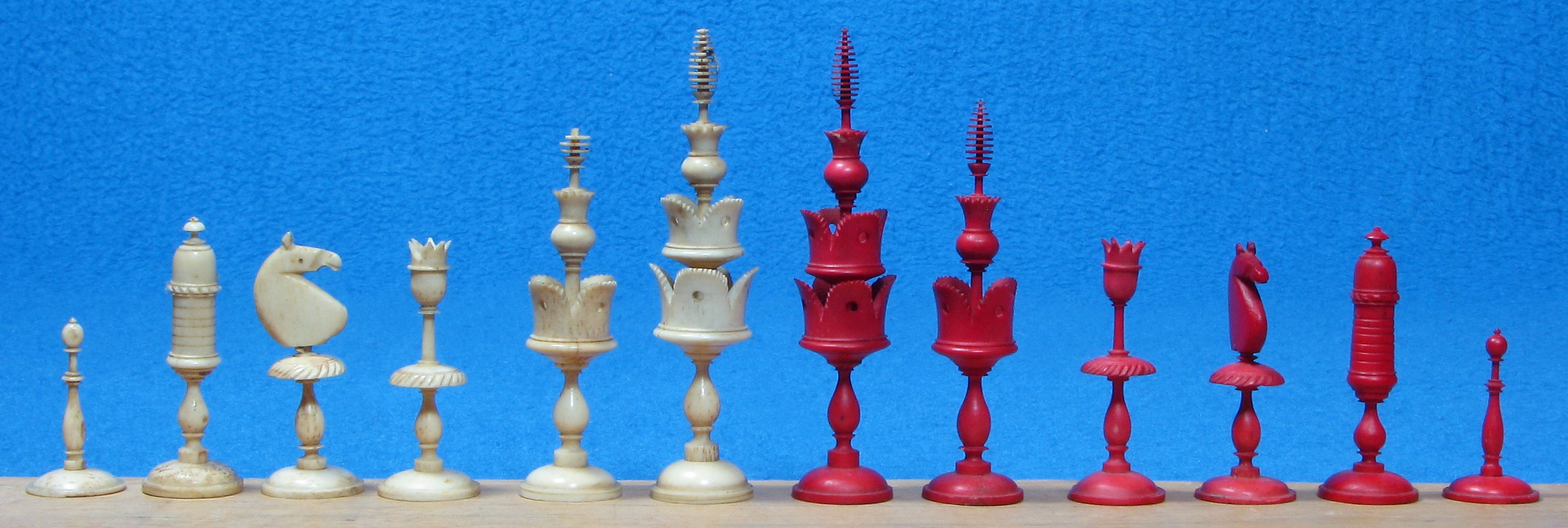
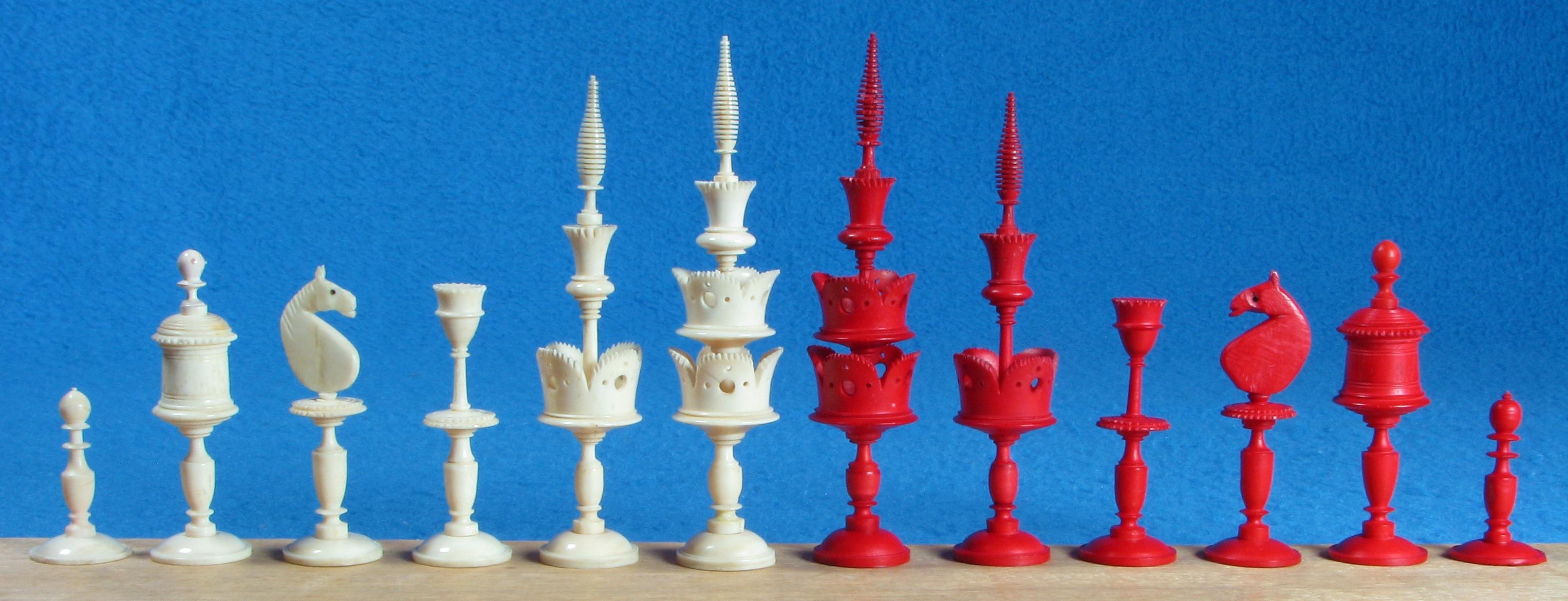
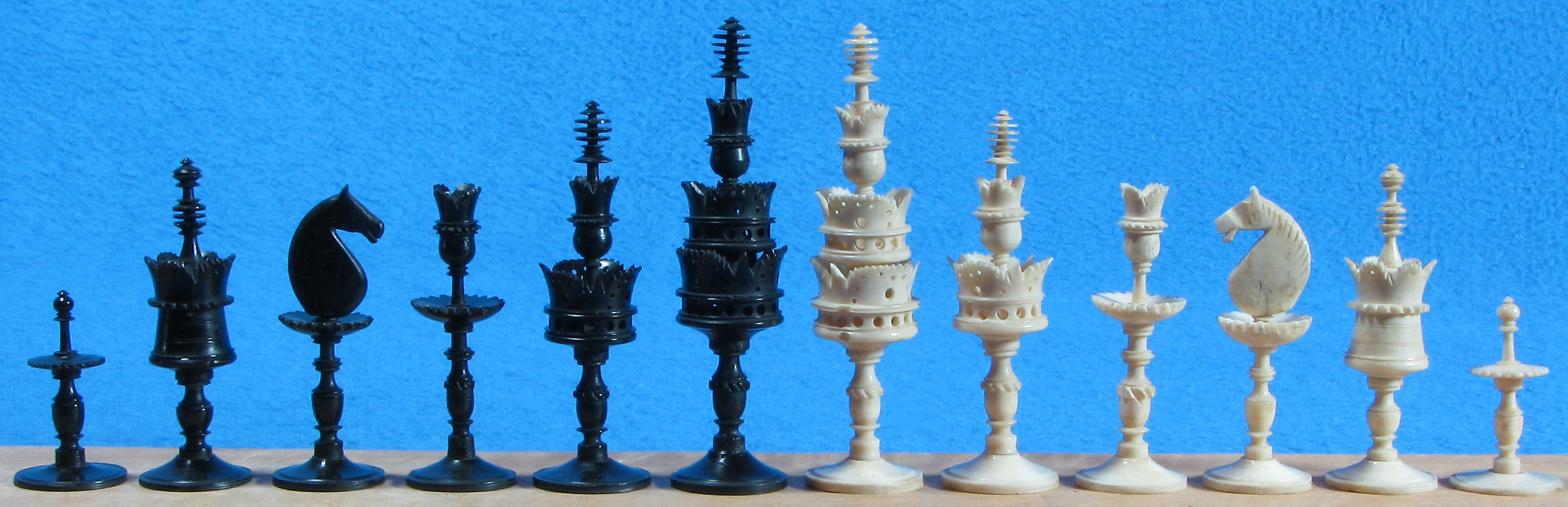
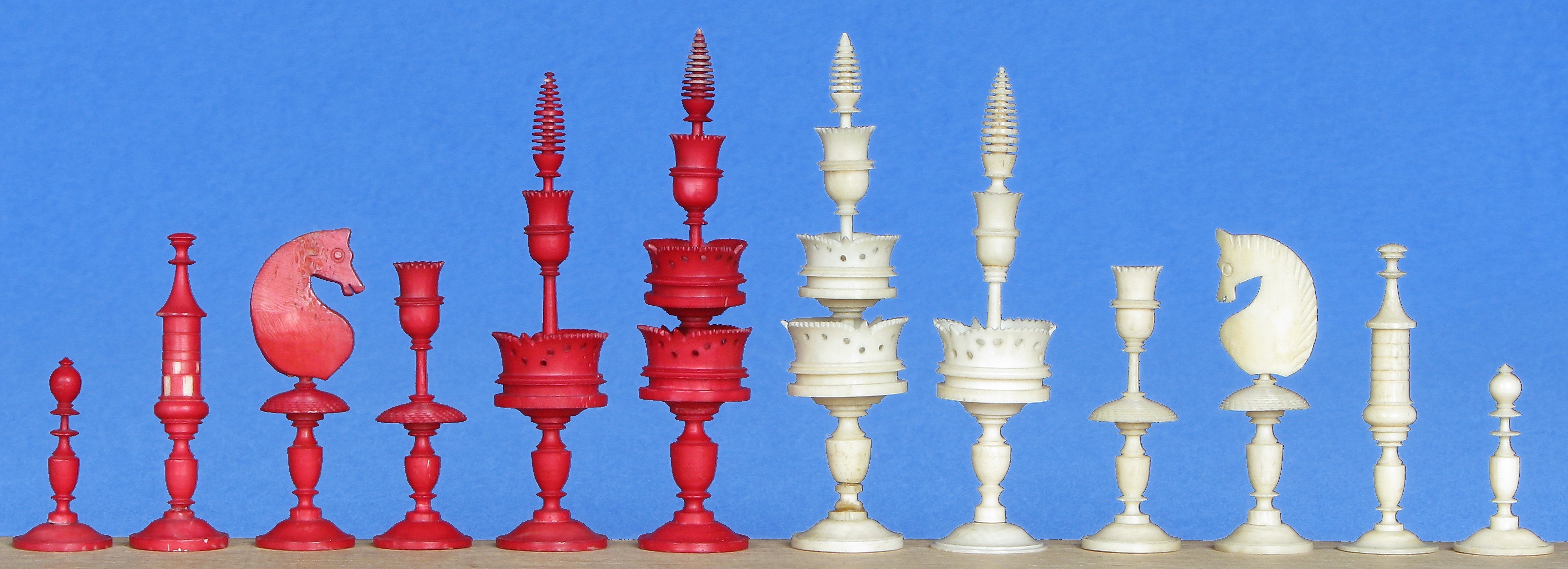
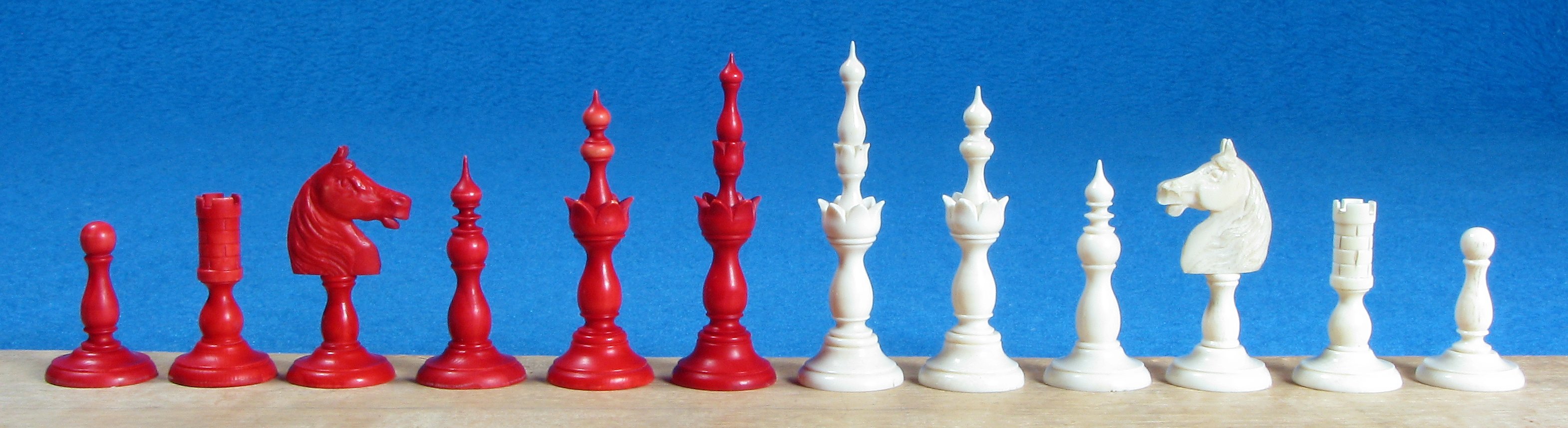
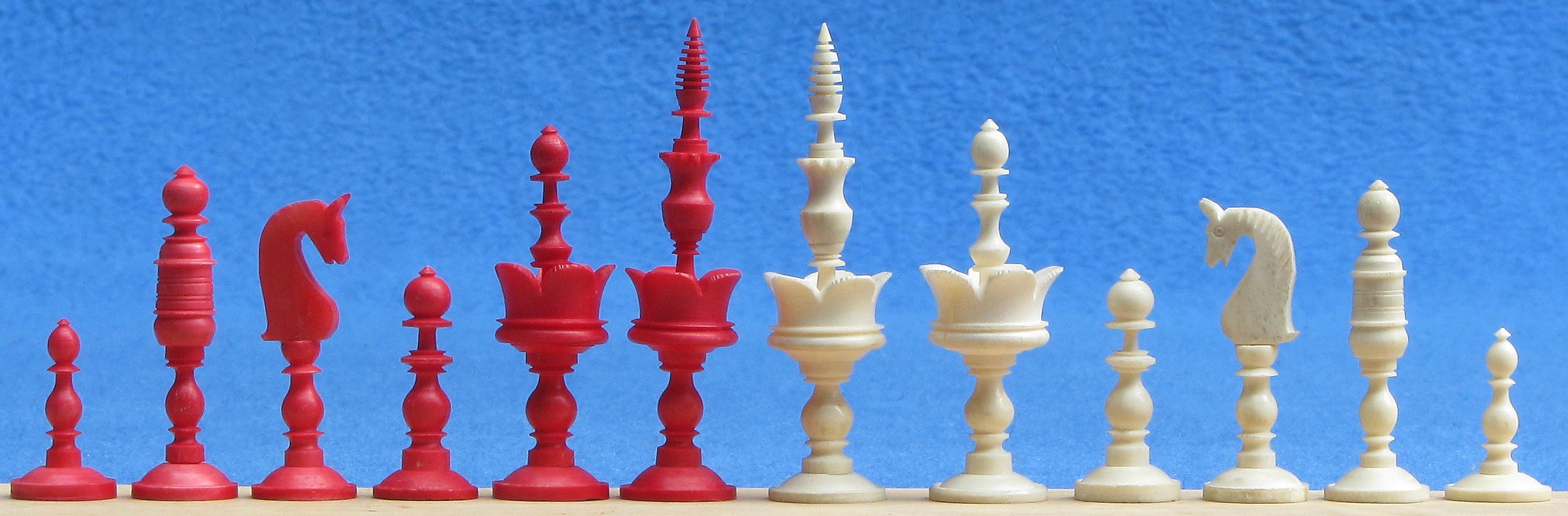
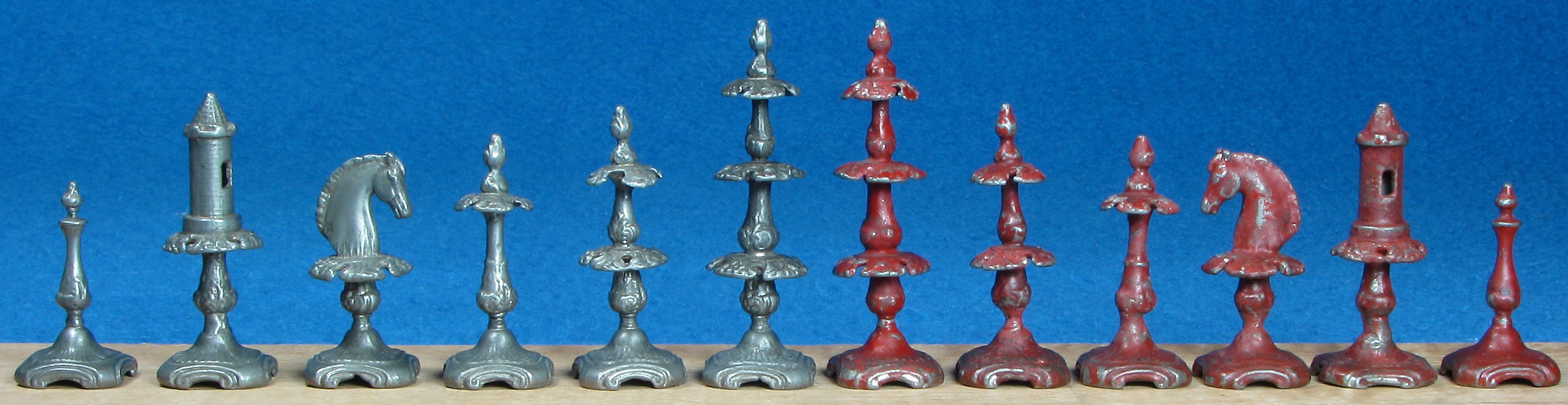
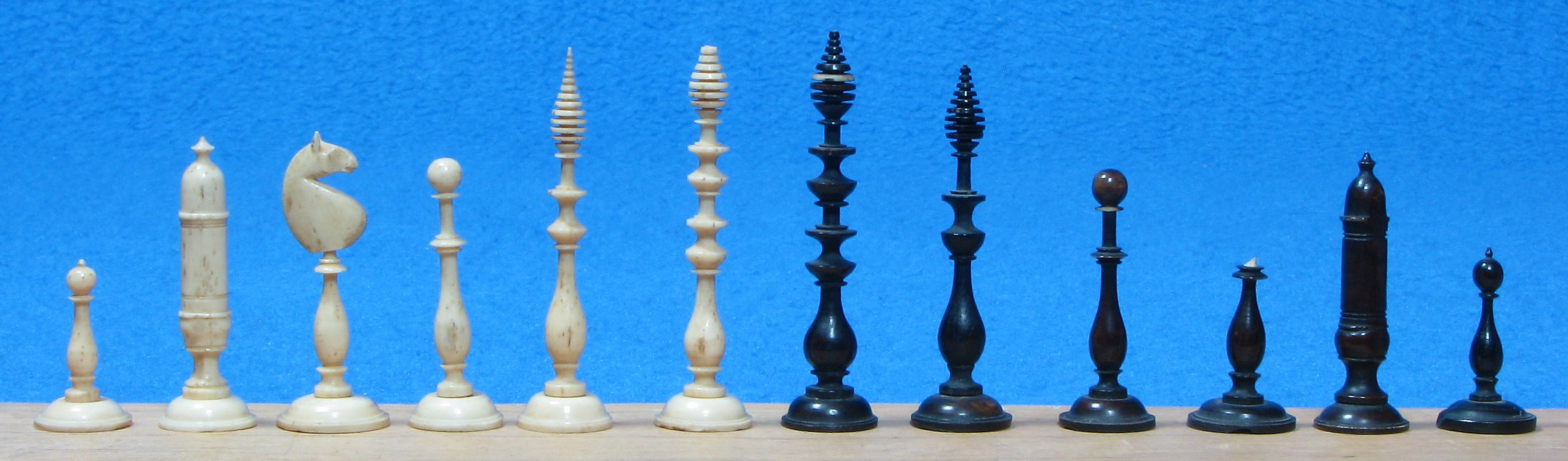
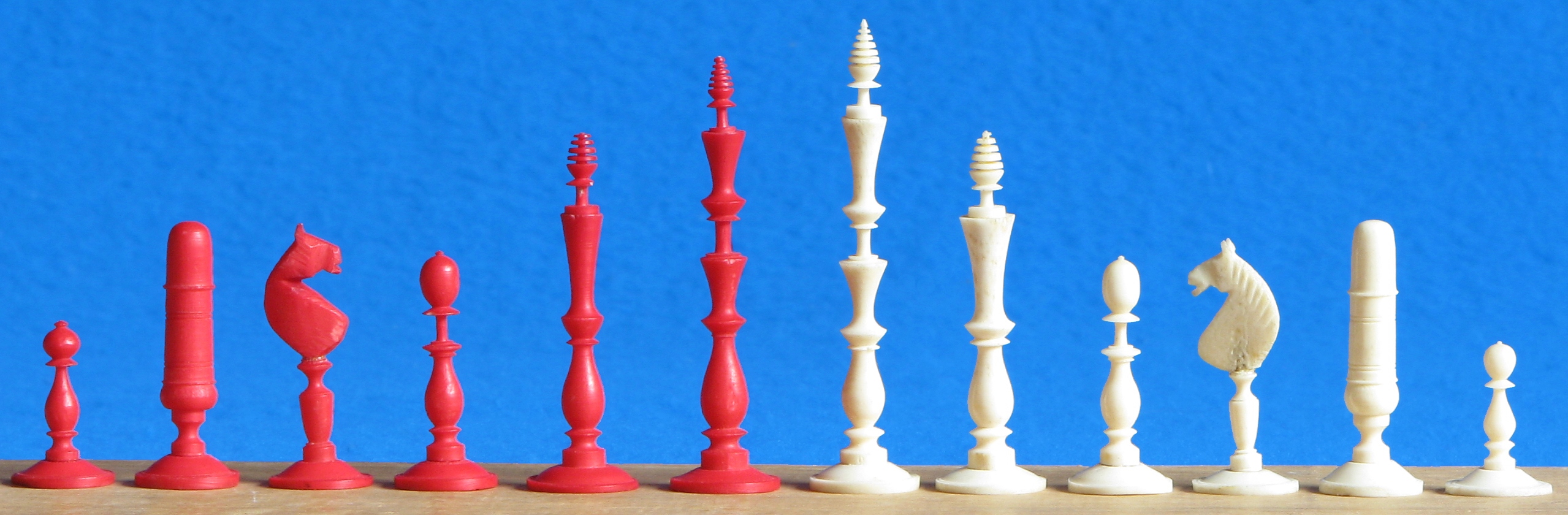
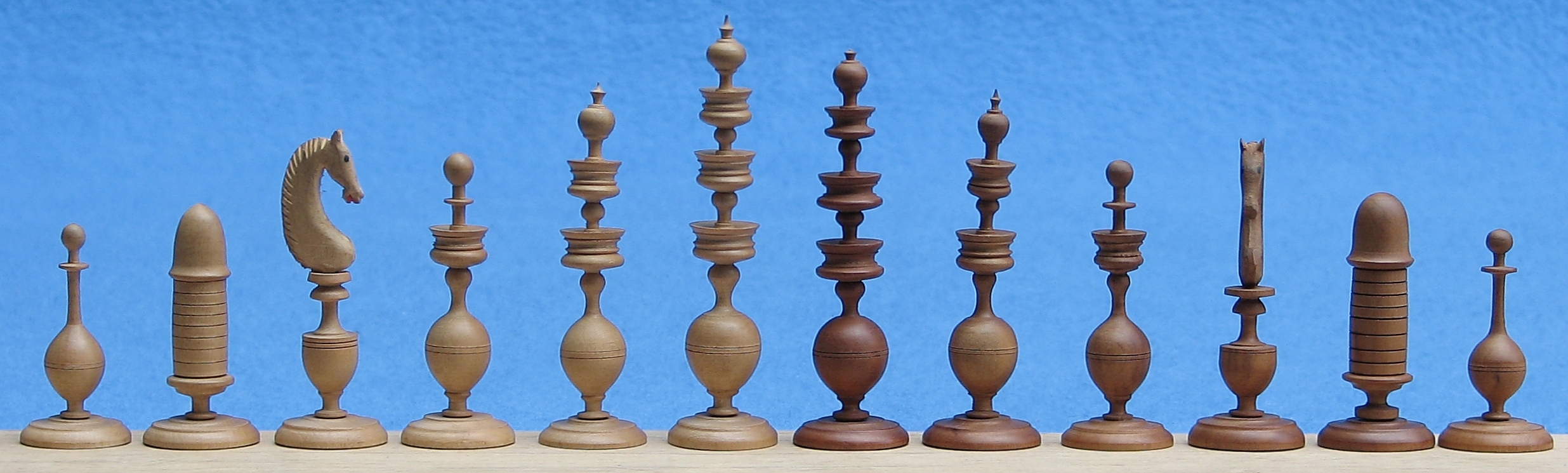
Germany. The "Selenus" sets, typical of Germany and Northern Europe, are named after Gustavus Selenus, the pen name of Augustus the Younger, Duke of Brunswick-Lüneburg, author of "Das Schach- oder Königsspiel" ("Chess or the King's Game"), an important chess manual of the early 17th century (1616).
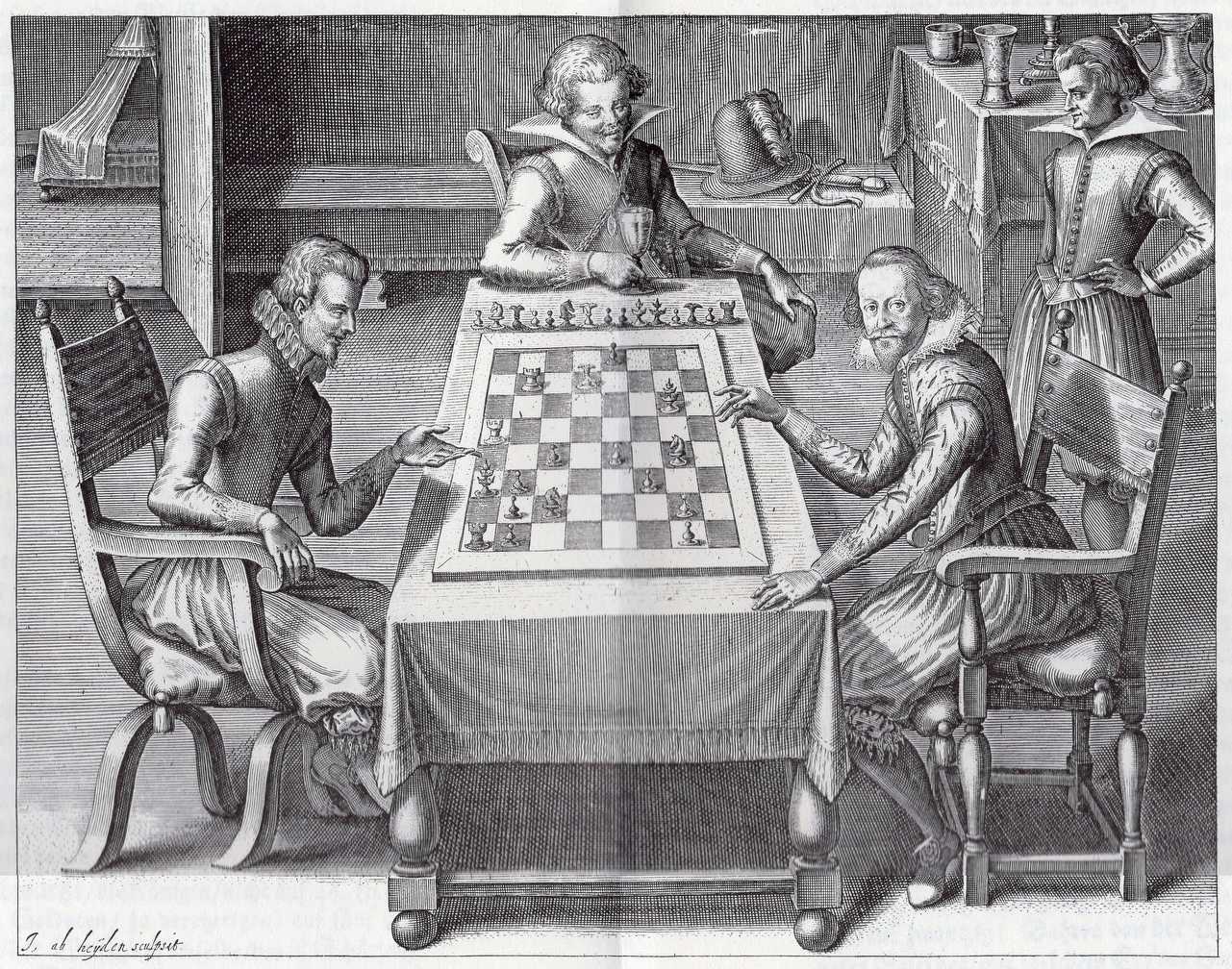 The engraving in that book, showing chess pieces after which the "Selenus" type is named. This type was made a long period and the form has been evolved, but pieces very similar as in the book are made for centuries, as the ca. 1800 Danish and Swedish sets show.
The standard includes delicate lathe turned bases and shafts and tiers with galleries resembling crowns. Pieces were distinguished by heights, the number of tiers and sometimes by symbols. In England they were frequently called "Tulip" chess sets, because of the shape of the middle sections of the King and Queen.
The pieces are very fragile and easily damaged. The sets are very common, but complete and undamaged sets are scarce. You will notice that some sets listed here are rather damaged. There are 12 typical "Selenus" sets listed here, followed by some others which are disputable "Selenus" sets.
It is difficult to date these sets accurately. They have been made a long period and the shape didn't change that much. My theory, but not proven, is that in older sets the King has only one gallery, the galleries are not pierced, King and Queen do not have the feather finial, or only the King has a feather, bishops have not a flower like top and knights and bishops lack the larger and dcorated disc in the stem. Of course not all of these aspects act always together.
The 5th set, the brownish one, does have Kings with 1 pierced gallery, but I think they originally had 2 galleries. Also the white Knights do miss their collar.
The ivory "Selenus" set of the late 19th century is scarce because almost all "Selenus" sets have been made of bone. That set is a bit unusual of form as well. This set and box is very similar to a signed set made by J.G.Gärtner in the late 19th century.
The set estimated early 20th (late 19th?) century is an exception, because it has the old characteristics, except for fragility. Actually I think it is a later reintroduction of an old set. There exist also new Indian reproductions of the "Selenus" type set, which are easily recognizable because they are uncouth and miss the elegance of the antique sets. Unfortunately I do not have an example of it.
These sets came mostly in a small pine box with a sideway sliding lid. I did not make pictures of the boxes always. Set no. 8 is interesting because it comes with associated roll-board and chess box. We have seen such combinations with a "Nuremberg" set as well. Note that the ivory "Selenus" set came in a carton box with compartments for the pieces.