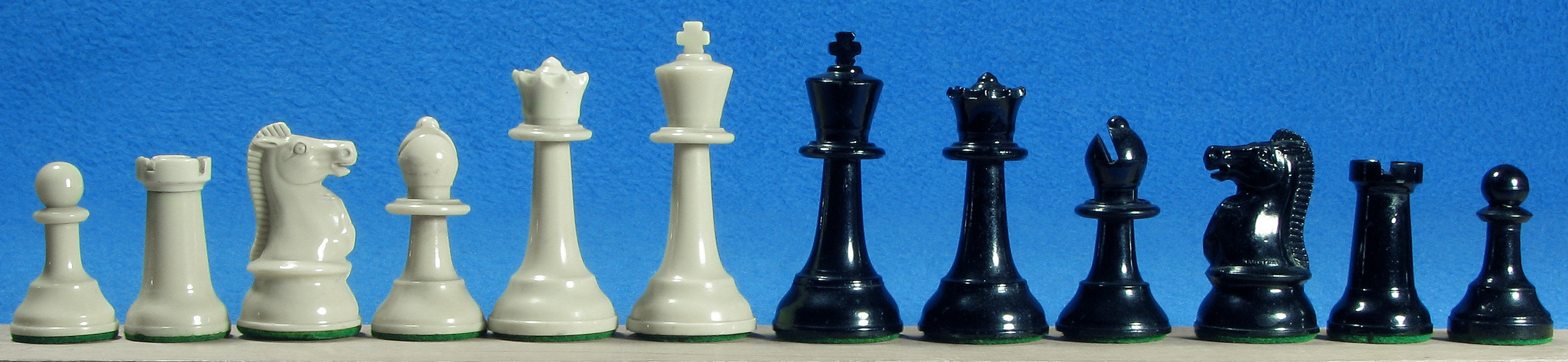
By courtesy of researcher and handler Nahuel Crusta, the following can be shared.
In 1936, Roberto Gabriel Grau, cofounder of the Argentine Chess Federation (FADA) and the FIDE, convinced the latter to bring the 1939 Olympiad to Buenos Aires and was appointed as the organizer. He contacted Malaspina to create a dedicated tournament set, resulting in the legendary "Magistral" set. It was designed in 1936-1937, and after that produced till February 1939 when all 260 tournament sets were finished.
The manufacturing process explains why these early Fenolit pieces vary significantly in size and weight. The individual parts were created using spin-cast compression molding, assembled entirely by hand around an internal zinc-plated steel screw, with their bases manually filled with lead and separately mounted. Notably, the black pieces were painted for an ebony look, causing them to fuse together, whereas the white pieces can still be unscrewed. Contrary to persistent collector myths, the official tournament sets were never gifted to participants, nor were the tournament and later commercial sets produced in two different sizes.
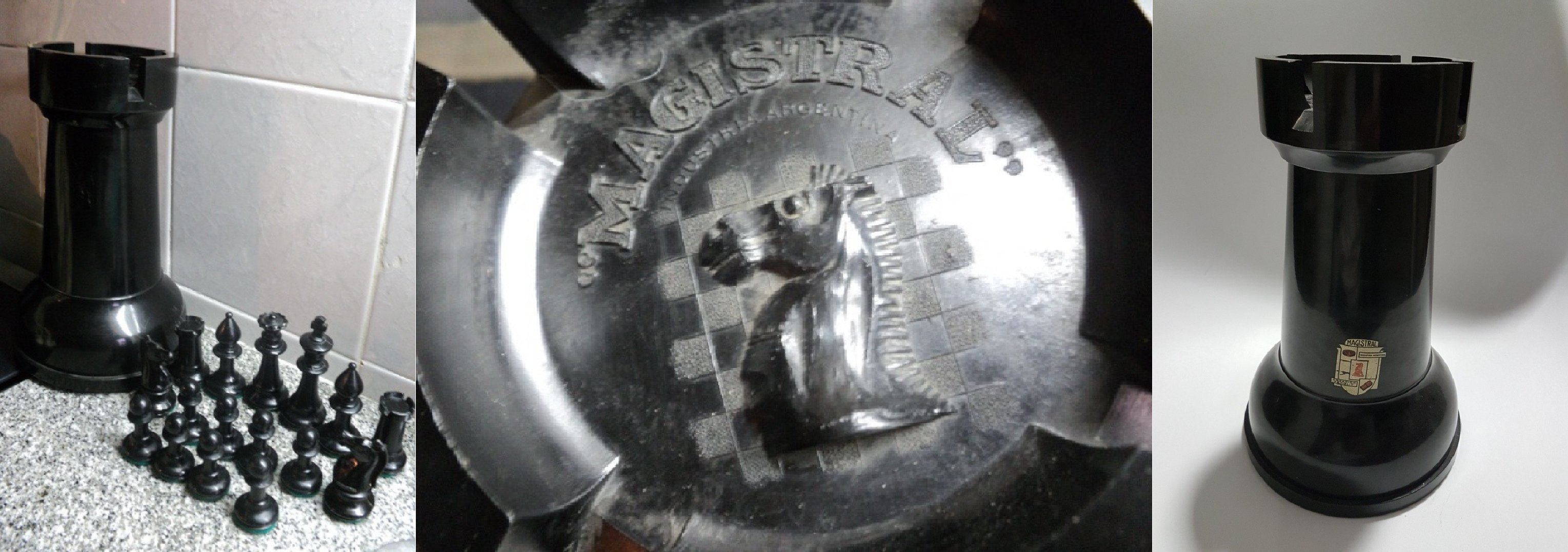 From the end of the Olympiad until 1948, Malaspina used the original molds for commercial sets, including sets of other compositions, such as resins with vegetable aggregates, quartz powder, and other early plastics. While the elite tournament sets came in the iconic tower box with a secure screw-on bottom, the commercial sets used a click-system. The final 1948 commercial run was a "commemorative" set featuring red pieces in a red cardboard box
My set came not in the famous iconic box in the form of a big Rook. Those were very brittle and often lost. It came in a box of the "King" set made by Reyes, which was used in the Candidates Tournament in Buenos Aires of 1981 . That set was inspired by the 1978 Olympic set designed by the Campo brothers.
An ultra-rare leaflet from 1939 promotes these sets. It is illustrated by a picture of Menchik playing in the parallel Women's World Championship, and pictures of Piazzini, Capablanca, and Alekhine playing in the Olympiad. Note the errors "Menehik", "Piazzimi", and Alekhine labeled as "ex campeon mundial", while he had regained it from Euwe in 1937.
From 1949 through the 1970s, a second generation of the Magistral set was produced using entirely new molds.