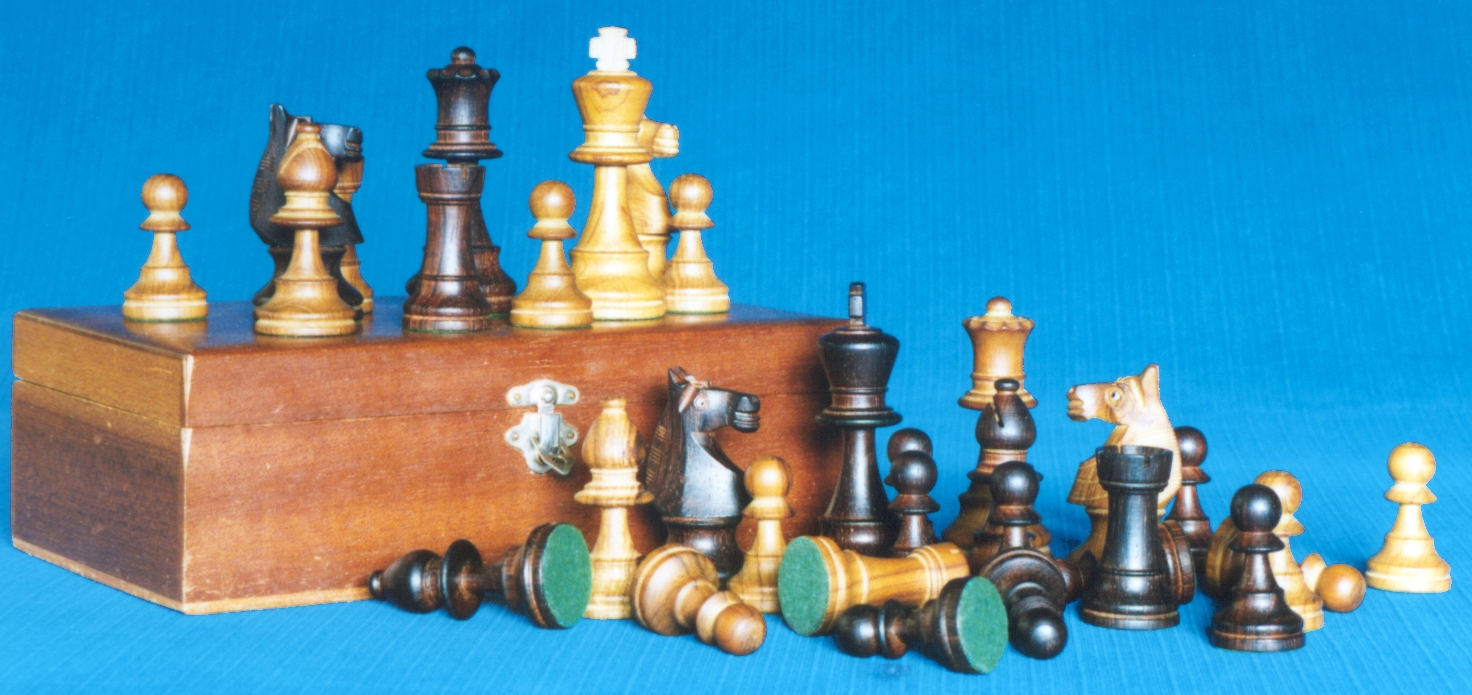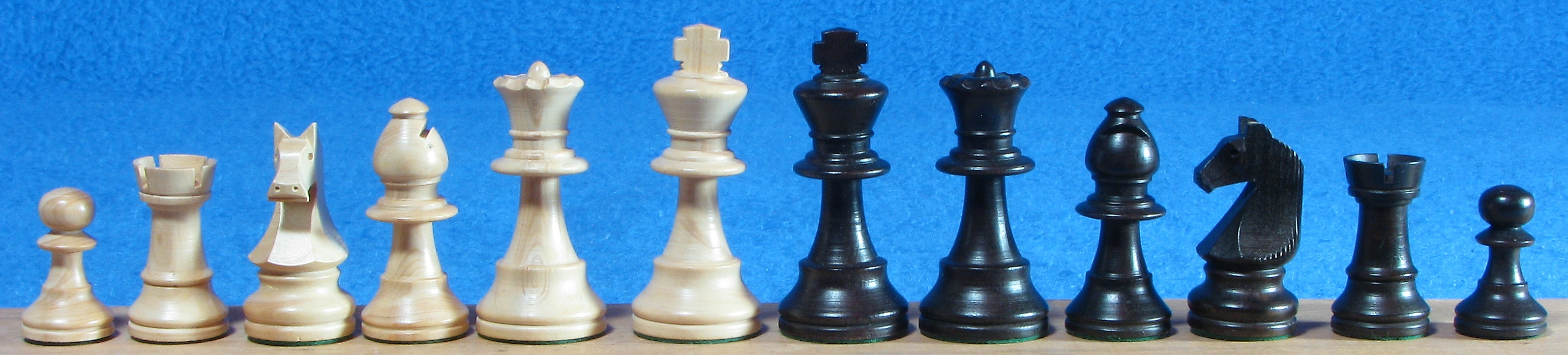
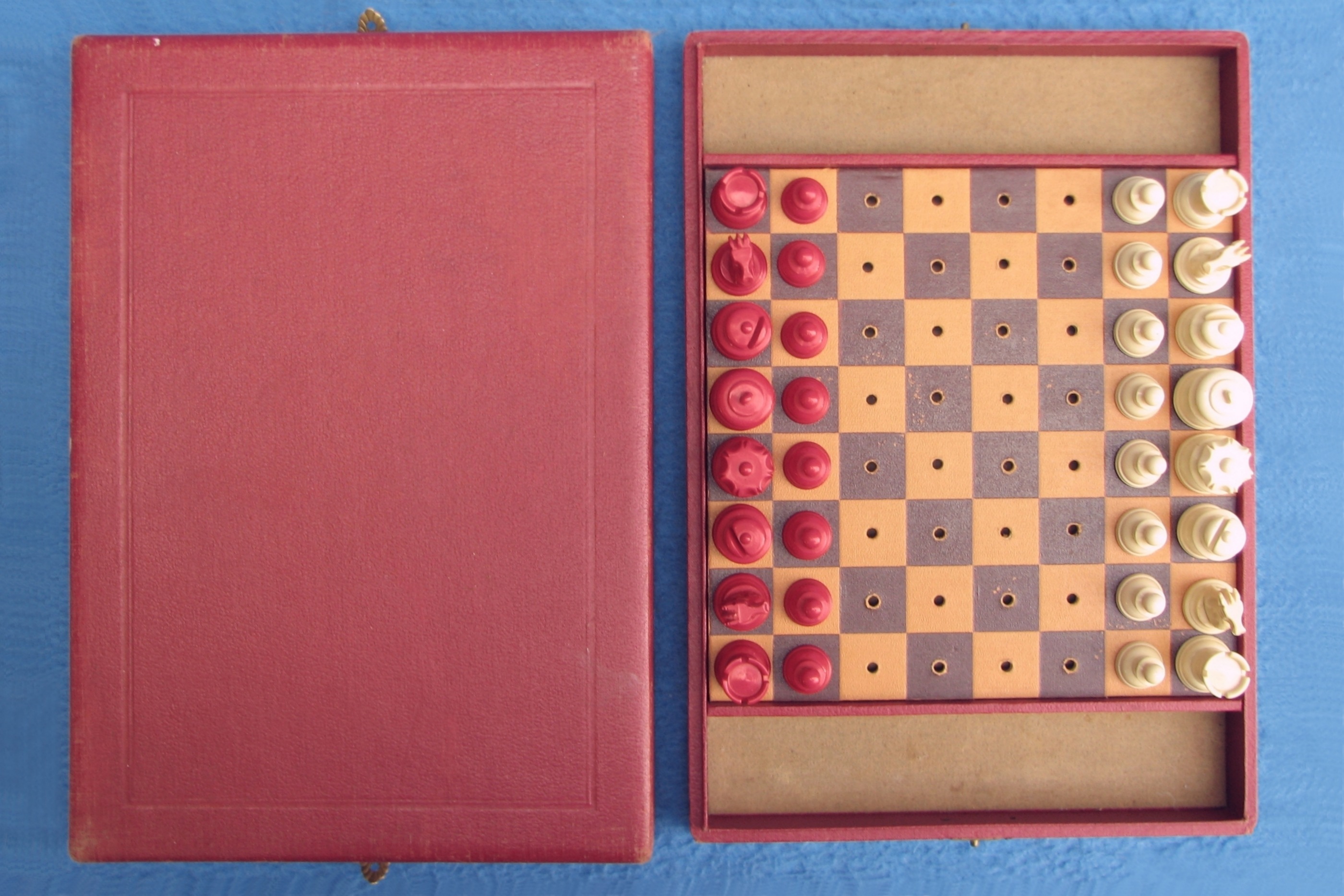
France. "Staunton" No.3 size set made of Galalith, most likely by Henri Chavet. The cassette says "Made in France". I think these rare sets are very collectable, although many collectors do ignore them!
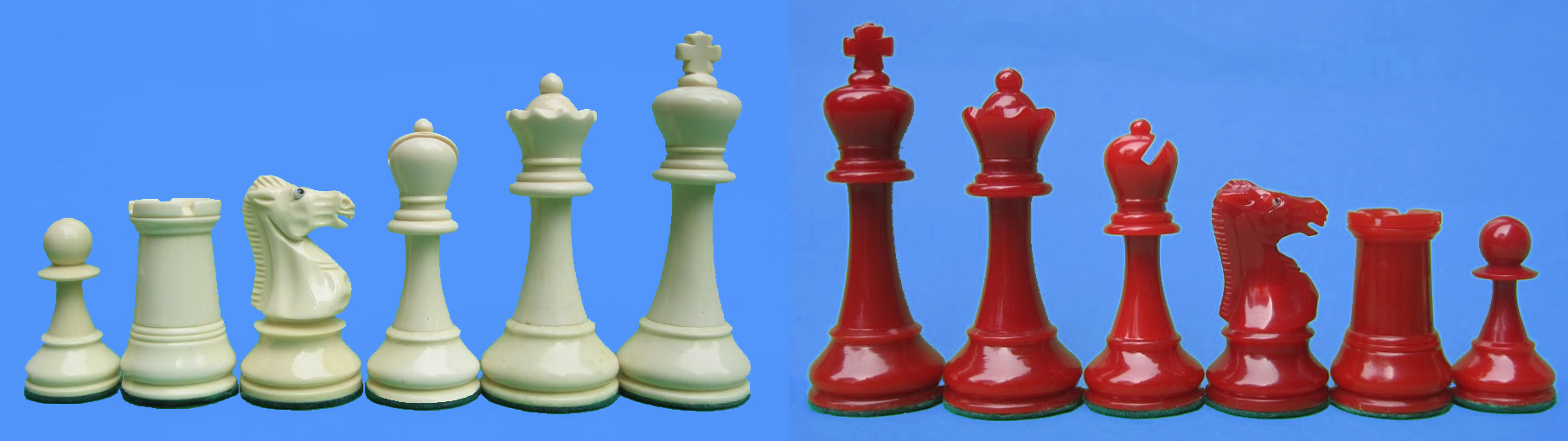
France. These 2 sets are made of "Galalith" in ca.1920. They are most likely made by Ernest Vincent. Design features like the specific compact Staunton form (size No. 2) and these characteristic Knights are found in the 1912 Henri Delaire catalogue and a 1933 Ernest Vincent advertisement.
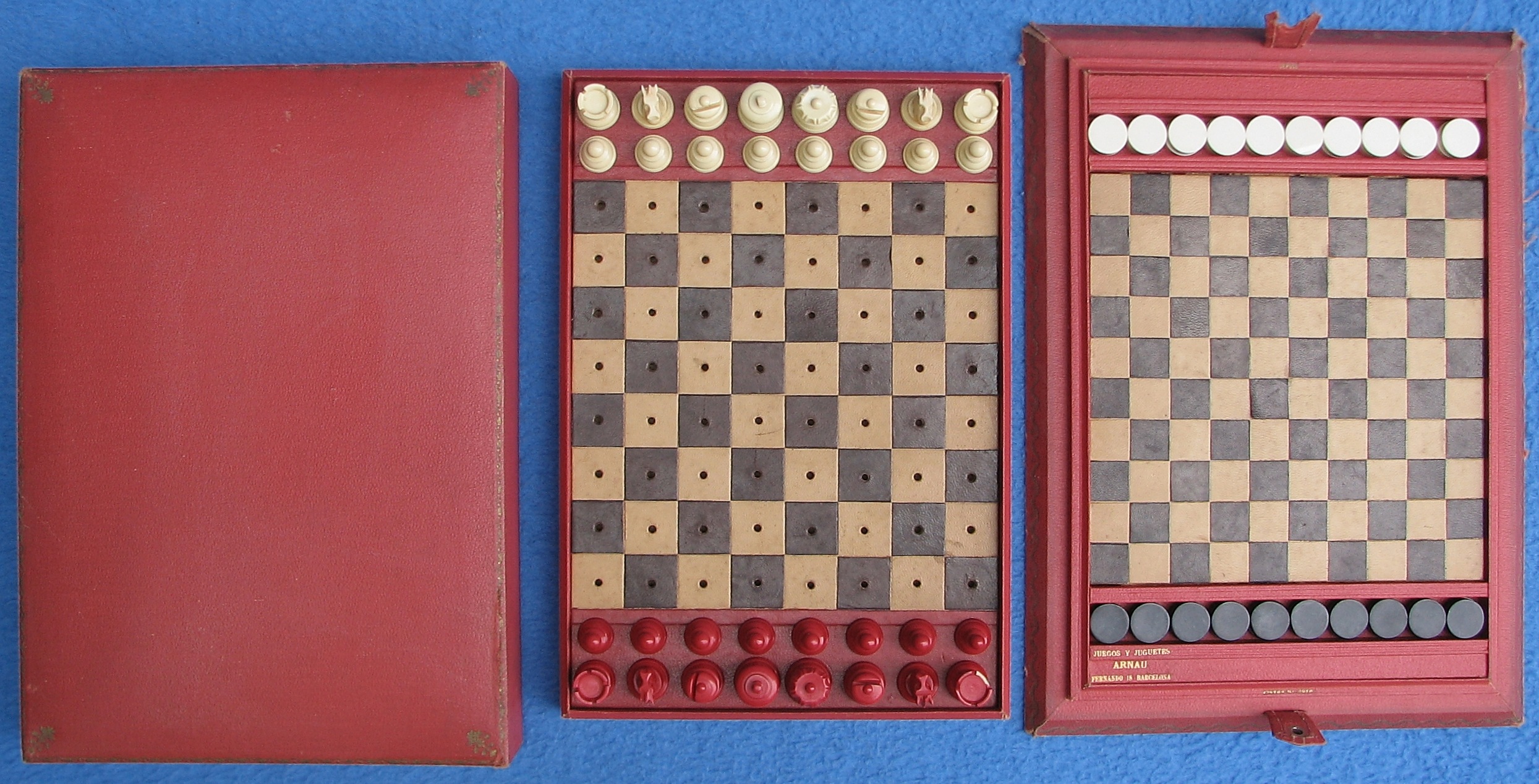
The 1st has following text on it: "Made in France" for "Juegos y juguetes", "Arnau", "Fernando 18 Barcelona". That was a very famous, historic toy and joke shop in the centre of Barcelona at the beginning of the 20th century. The shop was legendary for its practical joke items, magic tricks, traditional board games, and beautiful imported mechanical toys such as Meccano construction sets and Hornby trains. It closed ca. 1930.
The conchoidal fracture on the rook reveals that the red pieces are surface-dyed, a technique used prior to full colorization. The checkers were most likely purchased as finished pieces stamped from 2-ply laminated celluloid sheets (2 times ⅒" 2.6mm). In France was 2.6mm the standard thickness for celluloid sheets. At close inspection you see the seam at the white pieces because the white pigments left a just visible mark between the layers caused by heat and pressure during lamination. In the black checkers you don't see it.
The 2nd set has no checkers. Overall, it is a less luxurious version. The pieces are not exactly the same. In particular the Queen's crown has less points. Furthermore, it has a simple cardboard chessboard.
- France, most likely by Ernest Vincent, "Staunton"
- ca. 1920
- Galalith K 3.2; p 2.5; Checkers Celluloid Ø 2.0; h 0,52
- Box 37.0×26.8×7.7
- Board 21.5×21.5
- Set "Made in France" for "Juegos y juguetes", "Arnau", "Fernando 18 Barcelona"
This small No.2 size "Staunton" set is most likely made by Ernest Vincent in 1910-1930. The picture below can be found in the 1912 catalogue of retailer Henri Delaire and in an advertisement of Jaques in 1930, where they sell it under number 5062:
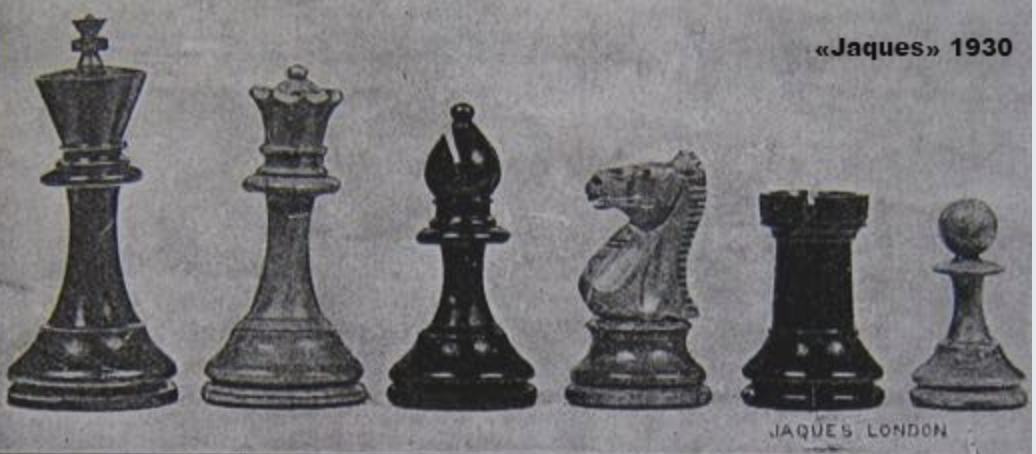
The set is weighted and felted. It has 1 black pawn replaced and there are some damages. It has beautiful Knights in the old Cook style.
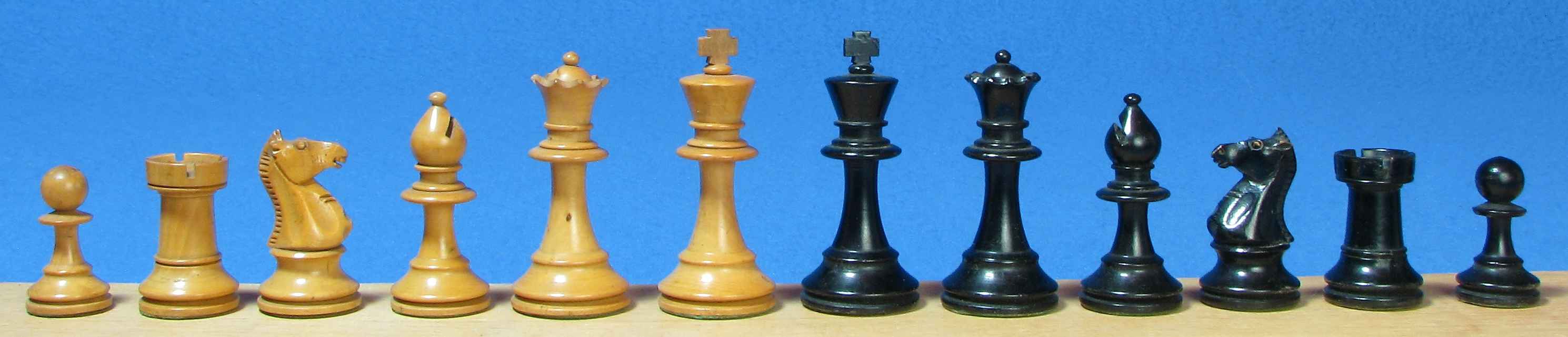
This small No.2 size "Staunton" set is most likely made by Pichon-Vincent. It matches globally the following picture:
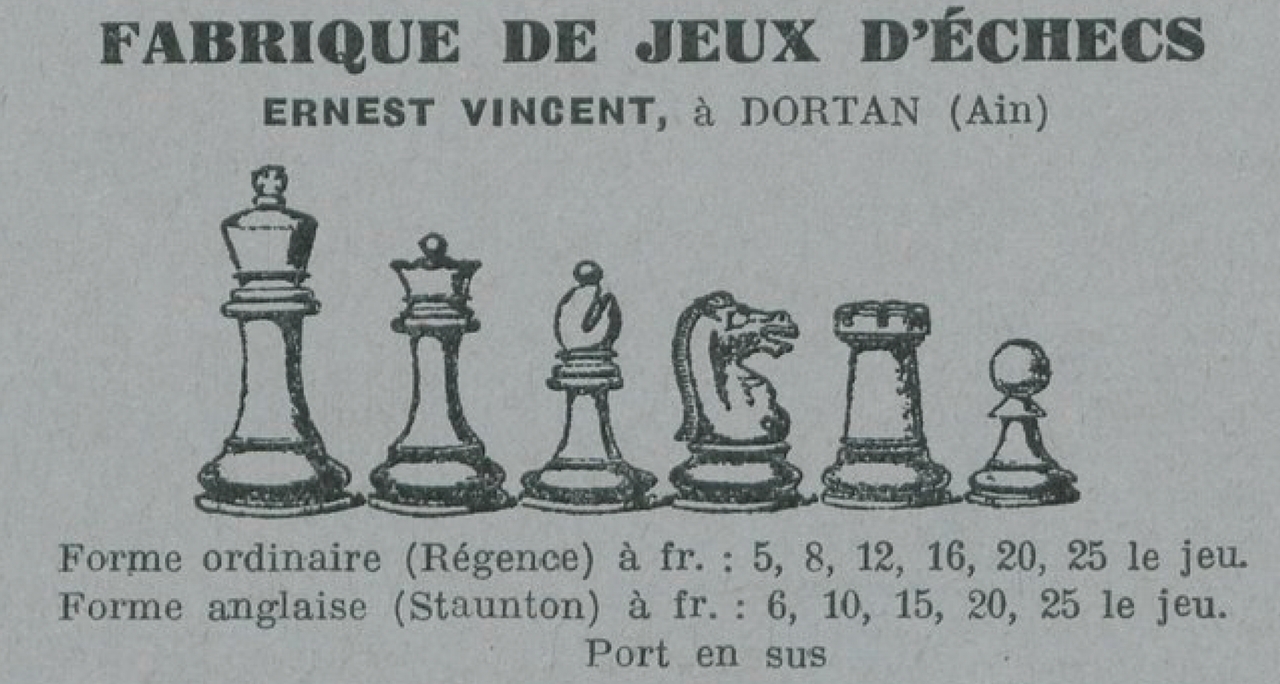
This drawing existed as early as 1890 and was only slightly altered. I think that my set is around 1930-1940, a transition period in which Pichon and Vincent cooperated before the actual fusion and launch of trademark Phidias after WWII.
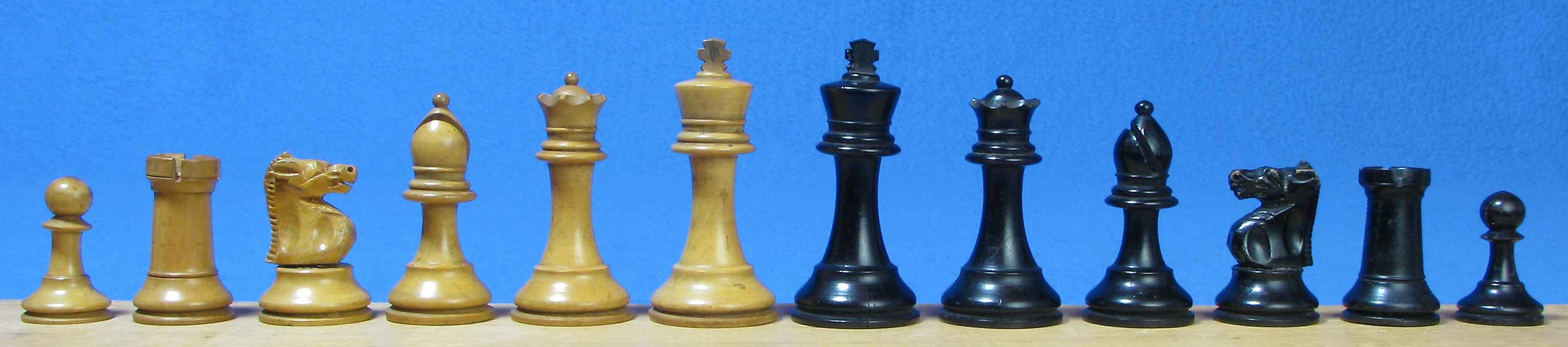
France. This Staunton chess set from 1968 was a gift of my parents and I used that set many years to play with. I simply did not have another playable set! It was not my very first one, that one is lost, but the longest present in my collection. I'm almost 100% sure it is made by Henri Lardy, but there is no Lardy label, only a sticker on the bottom of the box stating "Made in France".
In a 1977 ad in Europe Echecs magazine and in the Lardy catalogue of 1987 they called the Knight "Parisiens en une pièce". The typical Lardy pattern Knight is called "Tète fin", a name already in use before Lardy, and the simple Knight as in next set is called "Tète ordinaire".
France. This 1970 chess set is an ordinary boxwood "Staunton" No.3 size set, probably made by Henri Lardy. In their 1987 catalogue the Knight is called "Tète ordinaire". These sets were very often used in tournaments in the Netherlands in the 60’s-70’s. Lardy made these sets also for the Dutch company Revanche.
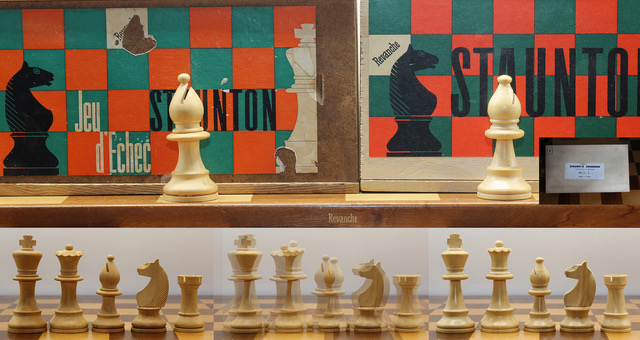
This set is equal to my first set that I used to learn chess with. Or maybe it is just a bit larger than my lost set. In my childhood I could only afford a small set!