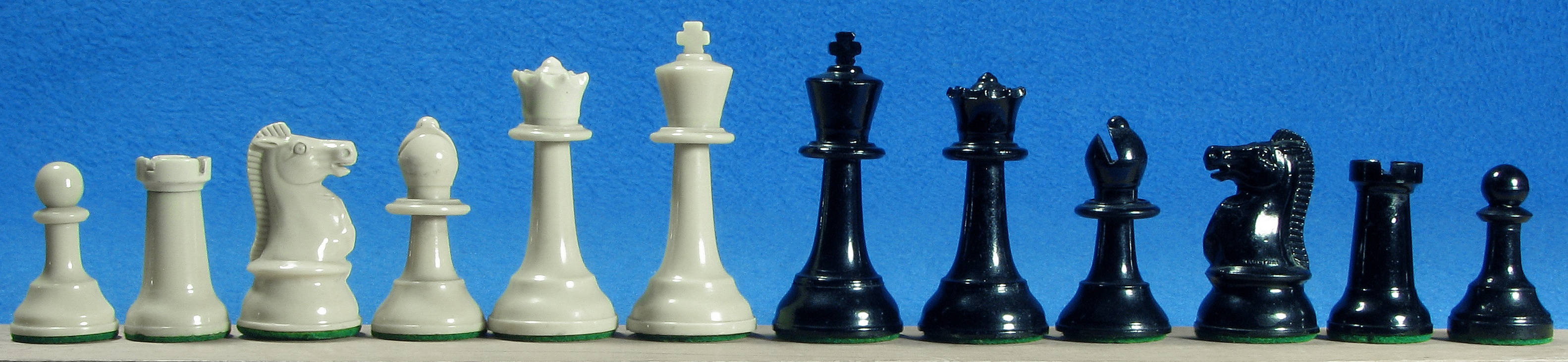
All pieces were assembled by hand from molded parts and are connected by a metal screw, resulting in small variations in weight and height. The latter could also happen due to restorations.
The breakout of WWII during the tournament caused a severe shortage of raw materials, leading to the use of remnants from earlier production runs. In the ensuing chaos, workers no longer strictly sorted the pieces, causing public sets to become mixed up, as seen in our example. Although smaller, the black King is much heavier, which illustrates the manual filling and assembly. Shrinkage does not account for the smaller pieces, since it is only 1 to 2 percent at most. The black pieces are painted for an ebony look, but this paint caused a chemical welding, resulting in black pieces that cannot be unscrewed, while the white ones can. The set is considered a 1939 set, but probably is early 1940s.
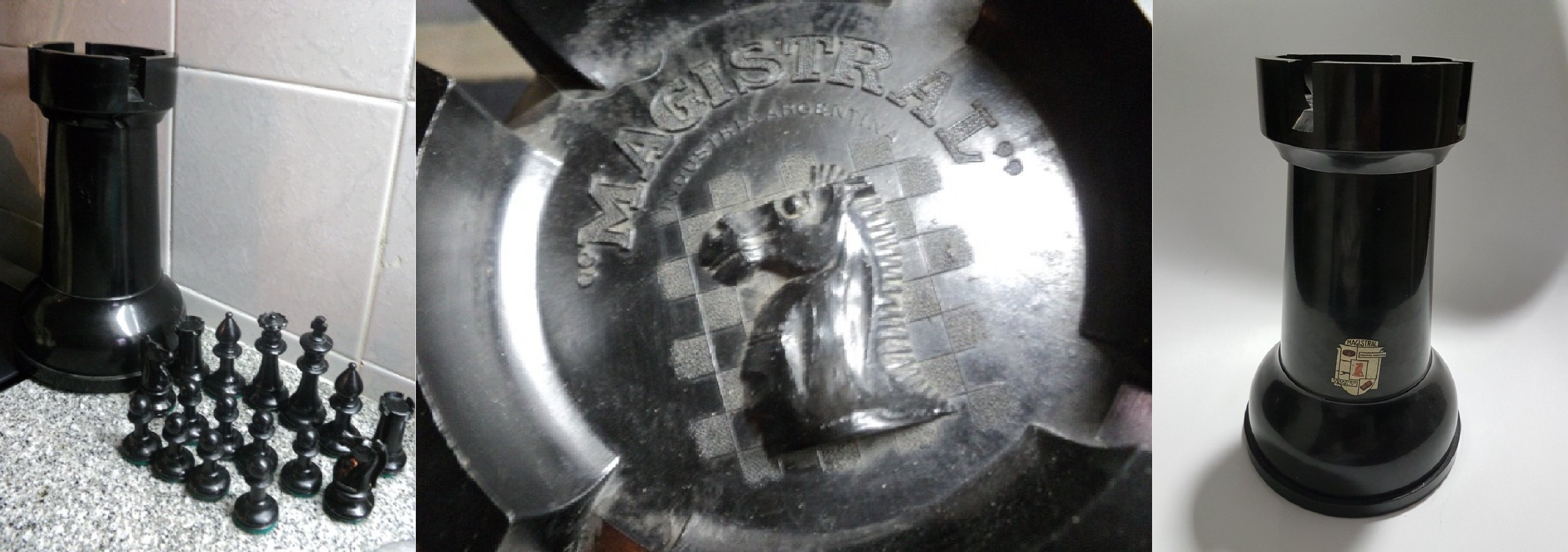 My set came not in the famous iconic box in the form of a big Rook. Those were very brittle and often lost. However, it is more likely that it originally had a cardboard box, just like the tournament set did. This set came in a box of the "King" set made by Reyes, which was used in 1981 in the Candidates Tournament in Buenos Aires. That set was inspired by the 1978 Olympic set designed by the Campo brothers.
The original pamphlet is an extremely rare item of historical chess memorabilia and gives interesting information. It is so rare that others on the internet need to use my pictures of it.
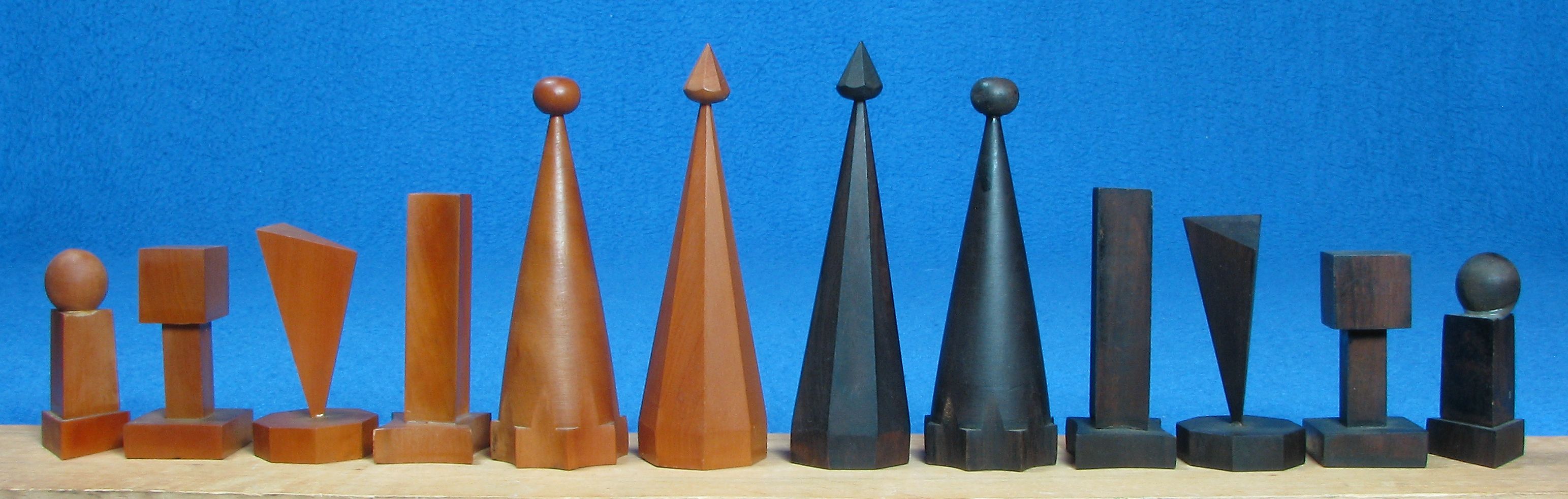
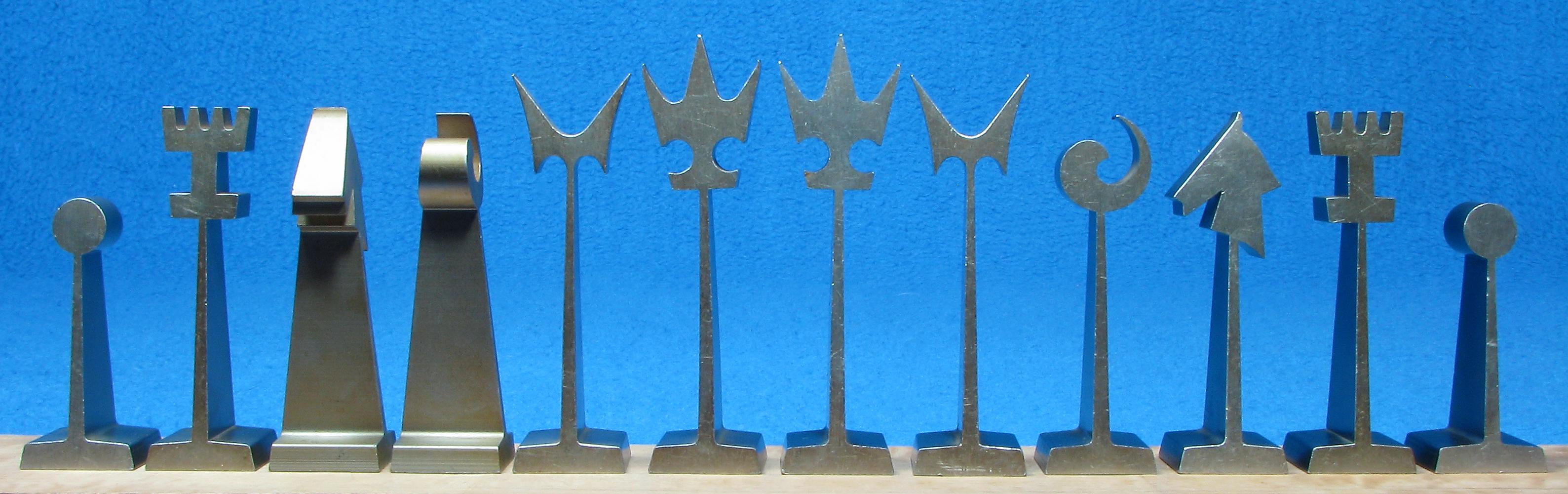
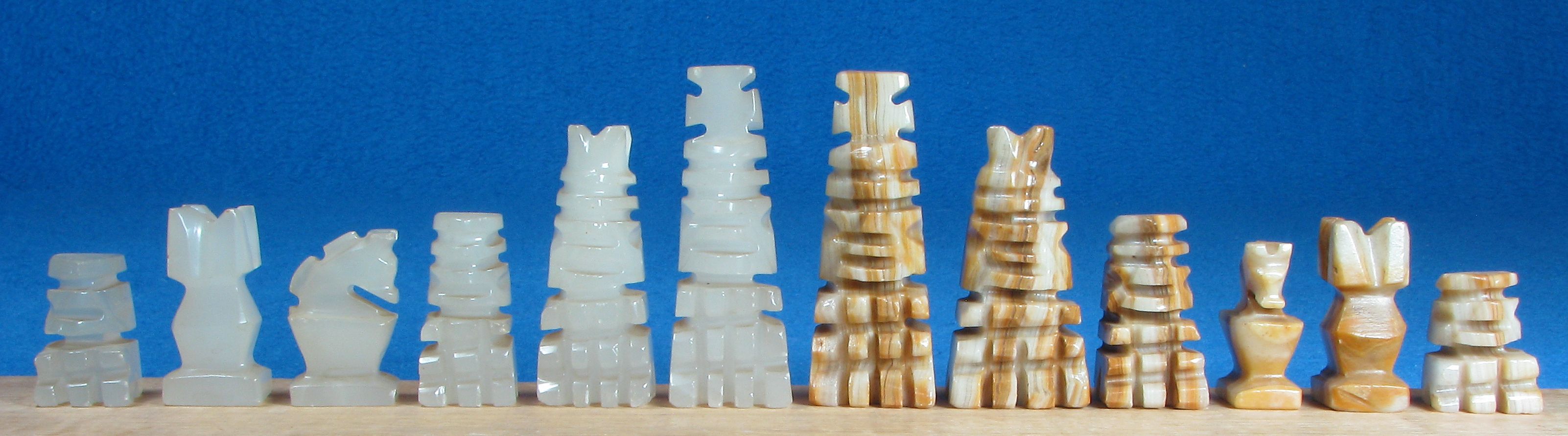
Canada. This is an abstract aluminium set purchased during the Olympiad of Haifa in 1976. The set served as shop window material in a photo shop. It was owned by an Israeli aircraft captain, who was responsible for the purchase of aircraft. It was said that it was a promotional gift of a Canadian aircraft manufacturer. This set has similarities with the well known set by Austin Enterprises 1962 chess set, 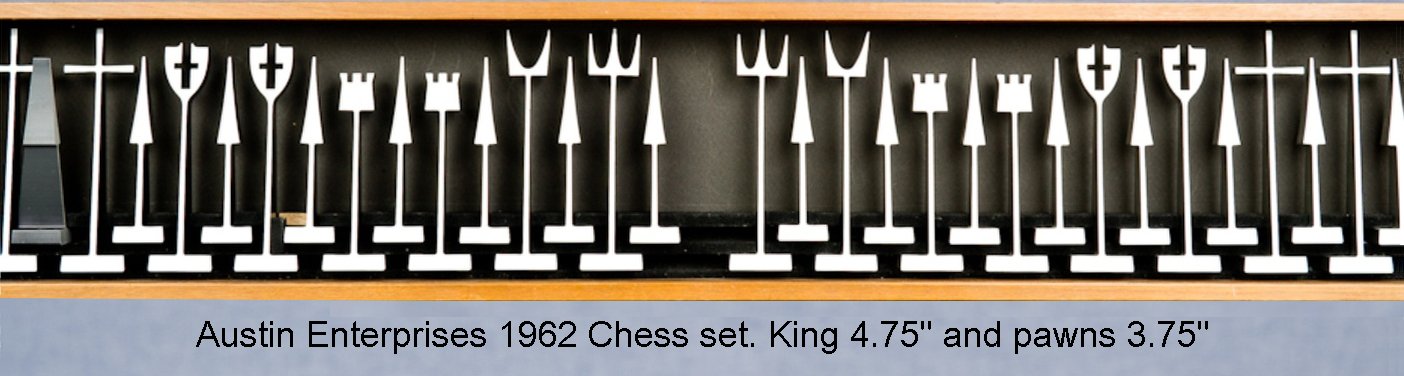 but our set could be one of a kind.
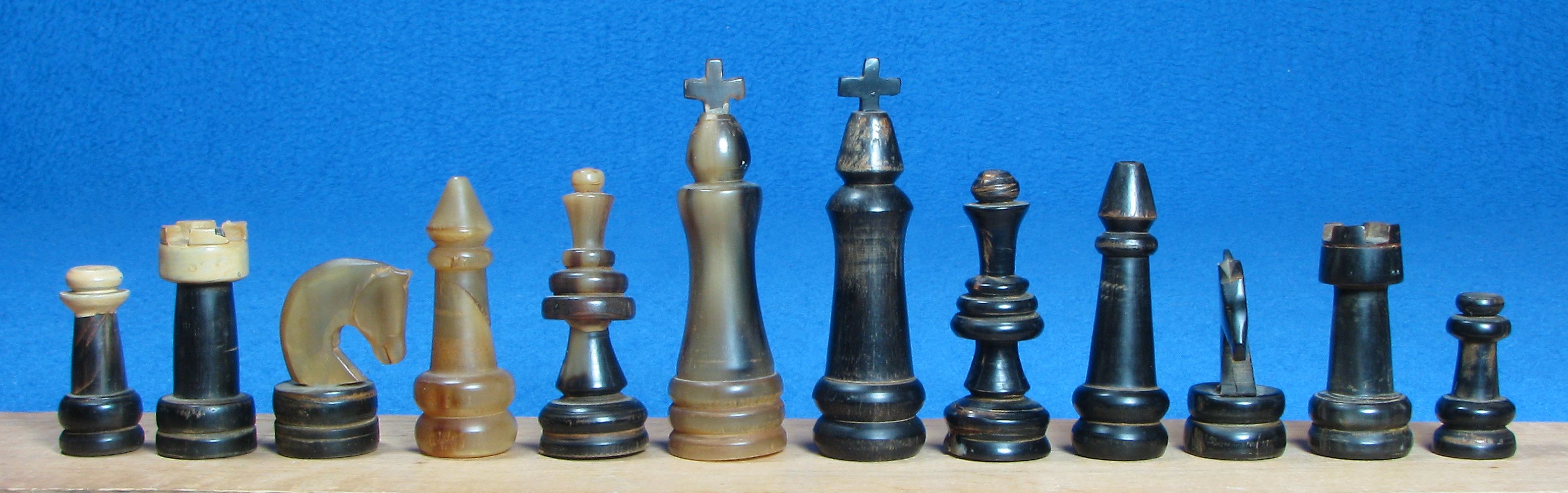
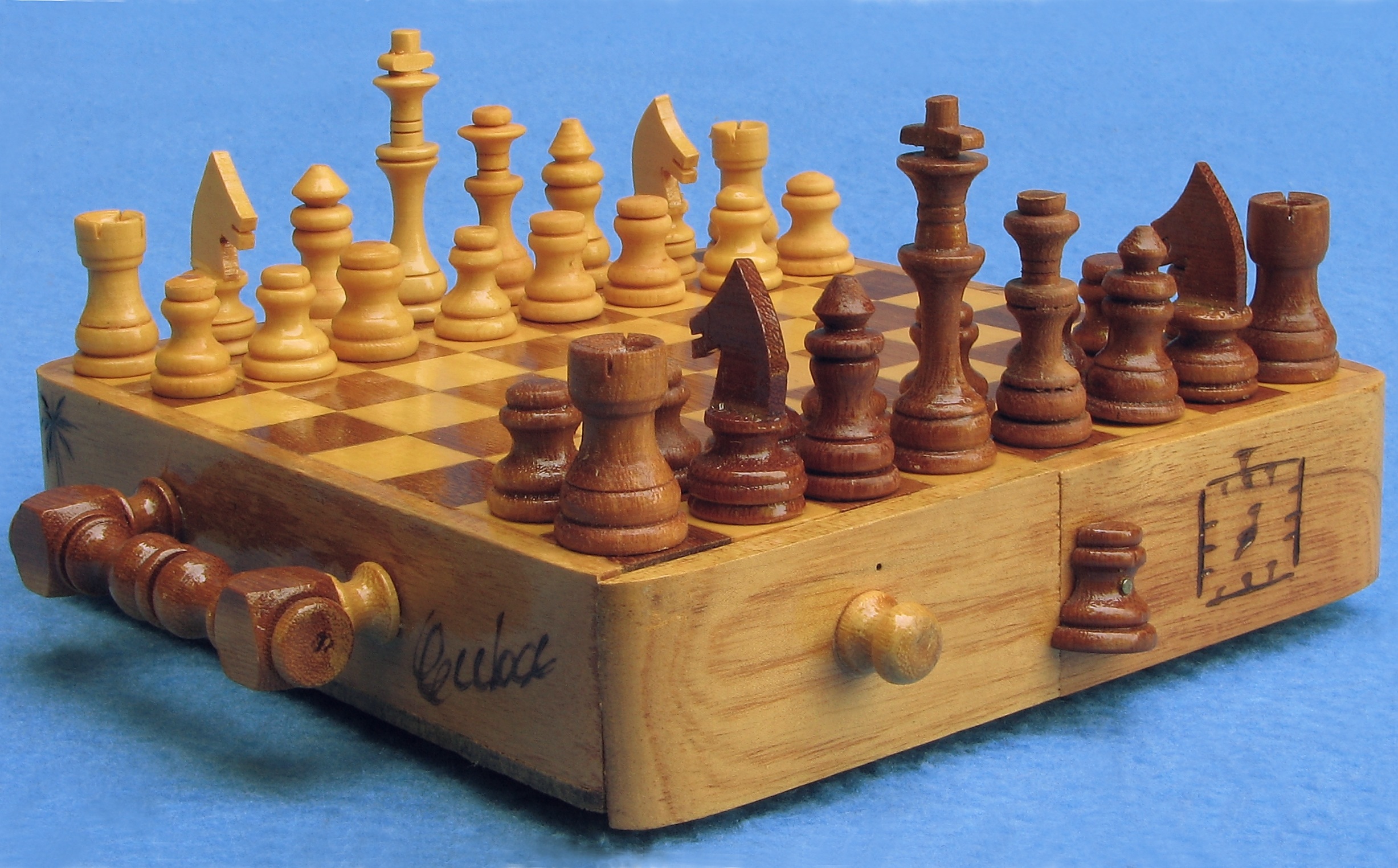
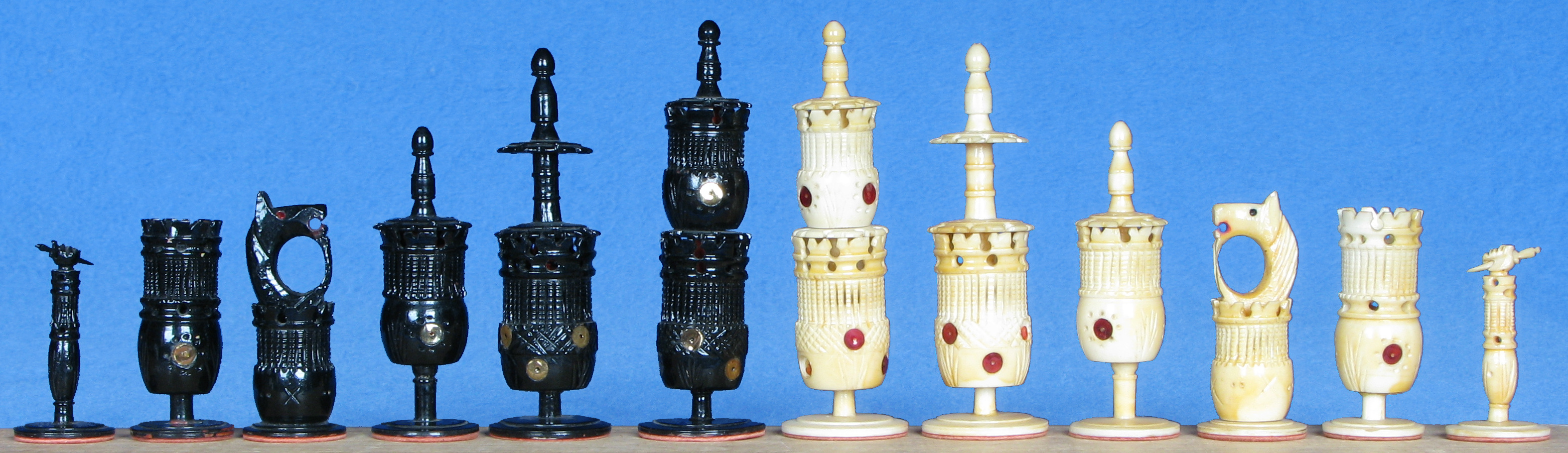
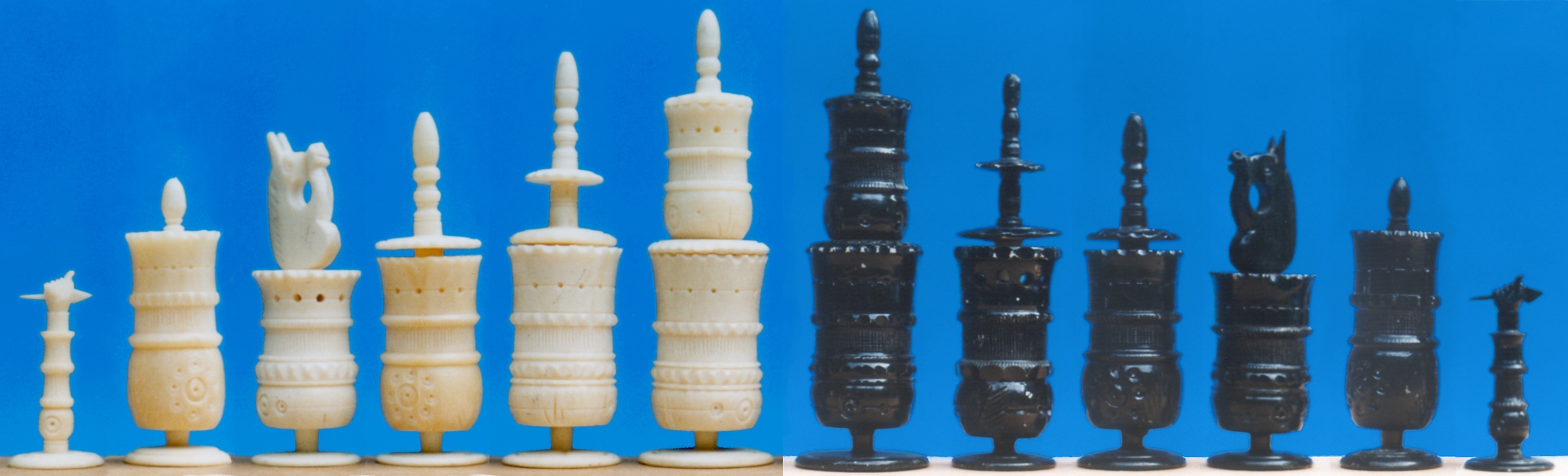
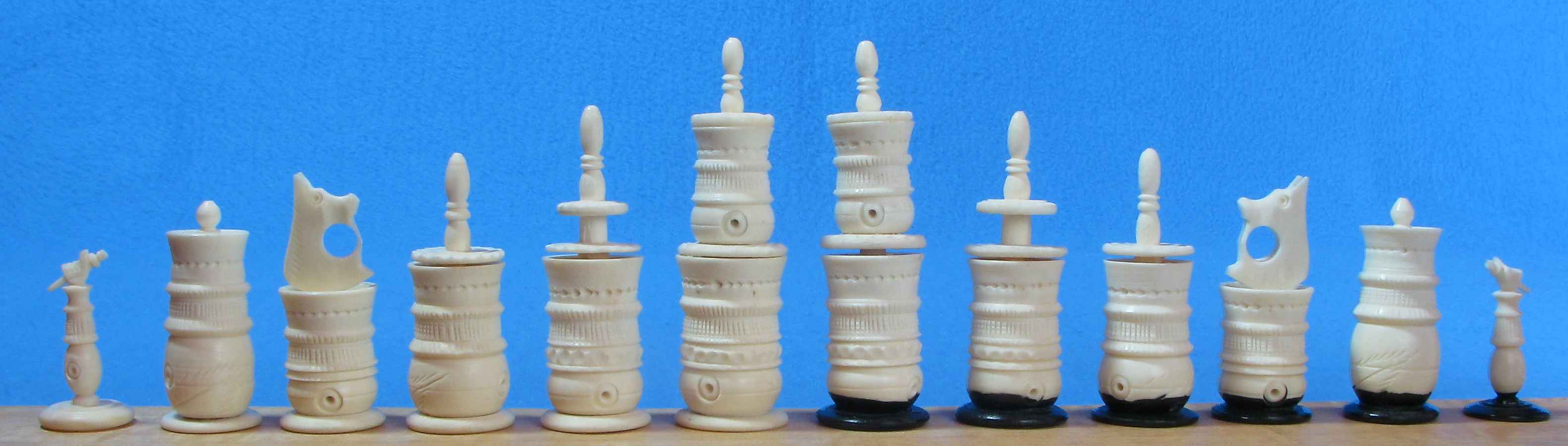
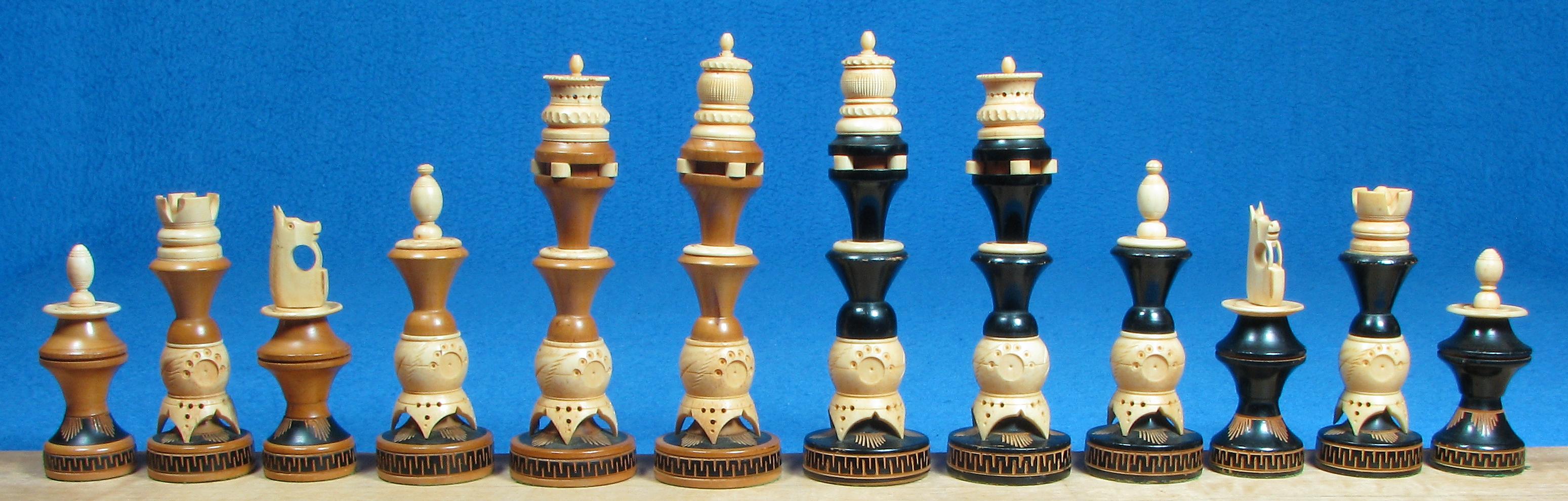
Mexico. The "Pulpit" sets from Mexico are rather common. Here are 3 examples of the "Classic Pulpit" style. The 1st from an chess auction at Bonhams, the 2nd from eBay and the 3rd from a fellow collector. They are composed of several pieces, often connected with a wooden pin. Mostly they are in bone, but 100% wooden sets are also known. The bone sets are almost always white and black, white and red or all white with one side having black bases. Actually the 1st set here did have red pieces once.There exist also a variation with faces.
I did have doubts about the dating of the sets. The Bonham's set was dated 1920, as was the set from eBay. I have seen one dated in the 60ies. The 3rd set here was originally bought in 1996 in Tijuana, Mexico, at the workshop were the sets were being made.
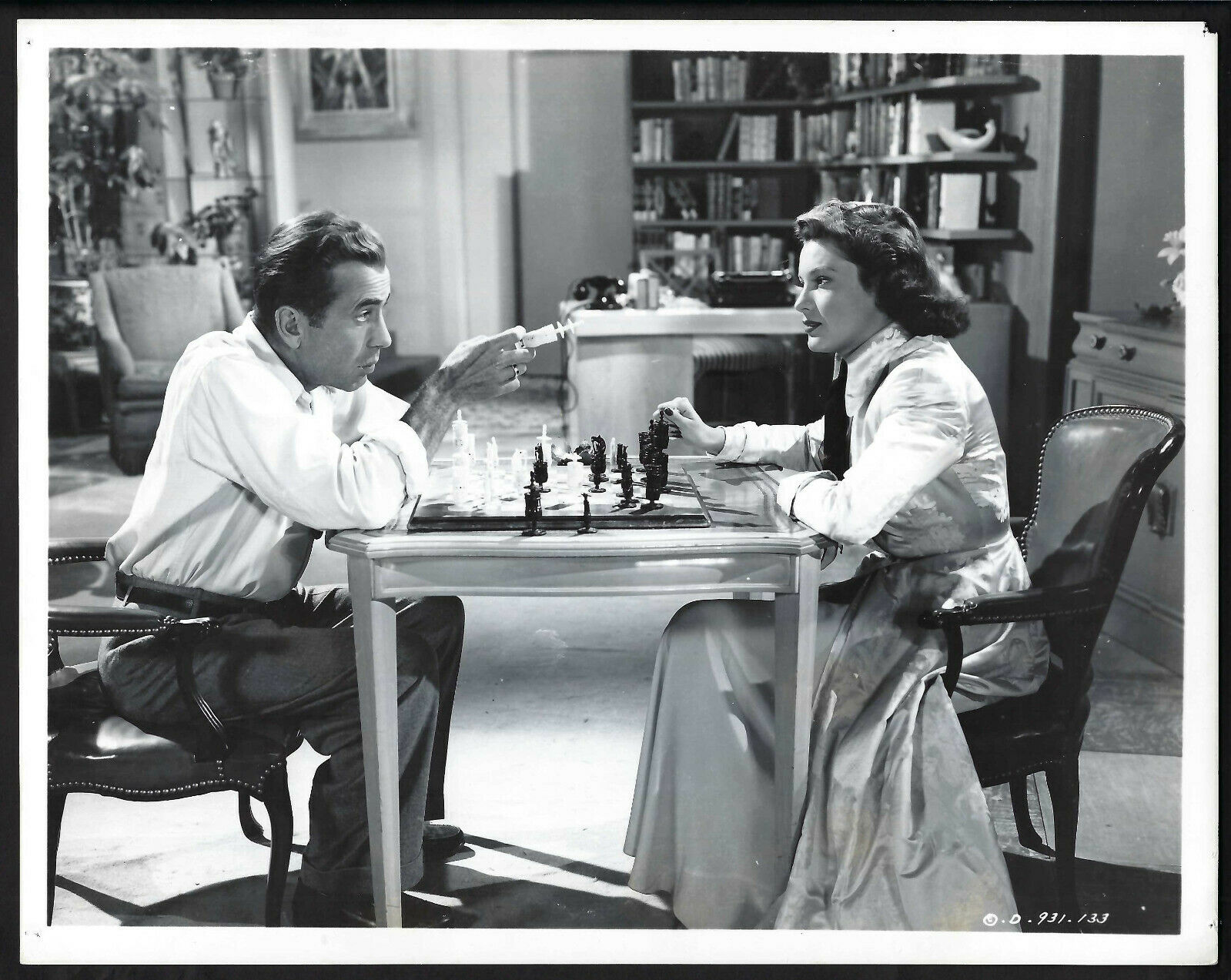 Josh gave on 10-9-2025 a comment with this studio still picture from the 1949 Bogart film “Knock on Any Door.” It seems likely the set was fairly available in Hollywood at the time. So a date of the 1940’s for that version seems reasonable. Before this info I did believe that the sets were produced somewhere in the 2nd half of the 20th century and did not believe that the production of these very similar sets goes that far, 1920 or even 19th century, back in history. Also because the huge amount of sets that are offered. But obviously are these sets made during a long period. Today I believe that the open worked Bonhams set could well be 1920 or even older. I do not think that the 2nd set is 1920, but probably half century younger.
USA. Plastic sets from USA marketed by Drueke and Gallant Knight Co. are very common. In spite of that they are interesting enough to list them here.
These brands did not make their own plastic chess, except Drueke after purchasing its first injection moulding machine in 1954. Chicago Molded Products Corp., Santay Products Co., and the Dutch Homas were actual producers of chess sets made of Tenite or, later, polystyreen. Tenite products transitioned from compression molding in the 1930s to injection molding in the 1940s. Polystyreen was injection molding only.
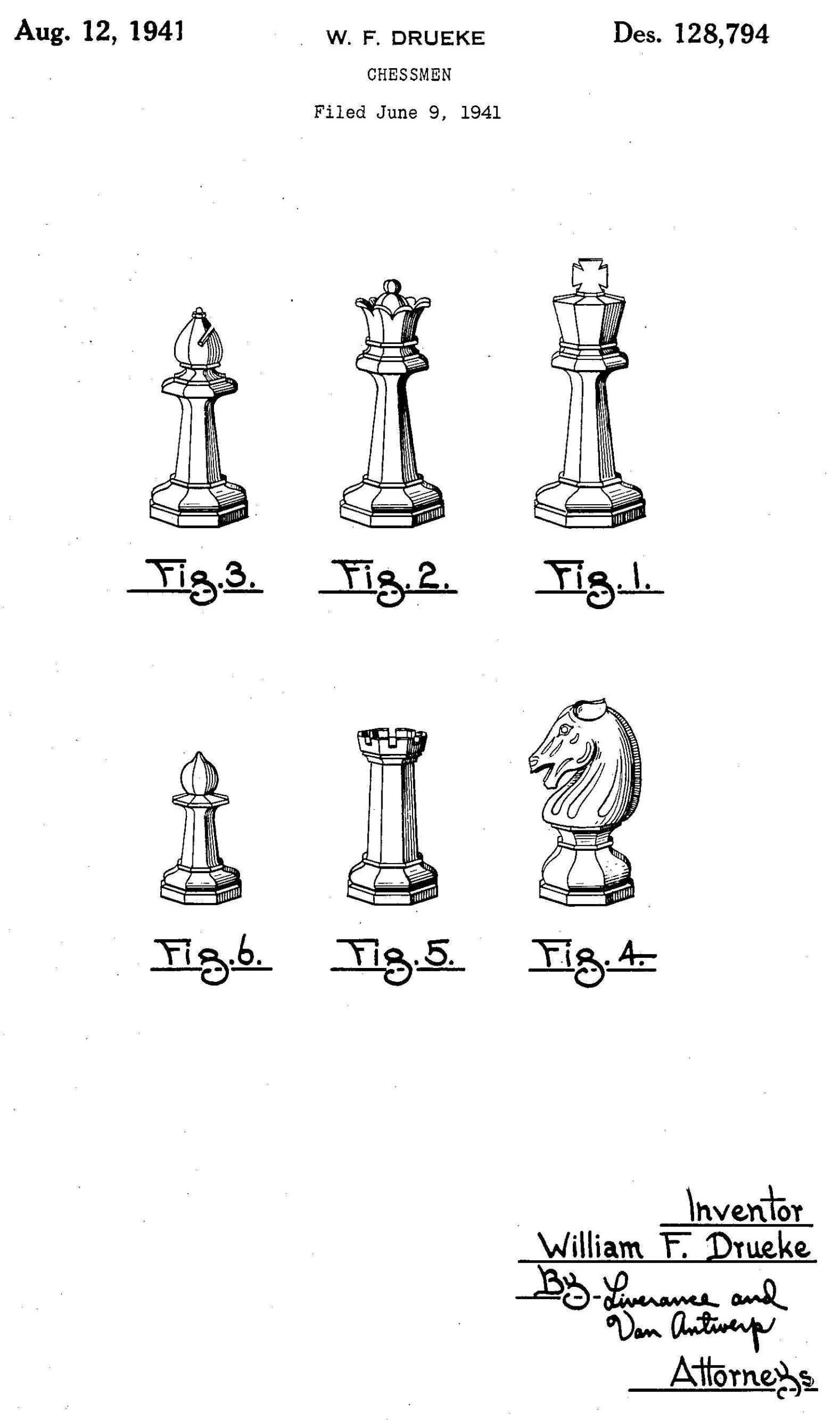
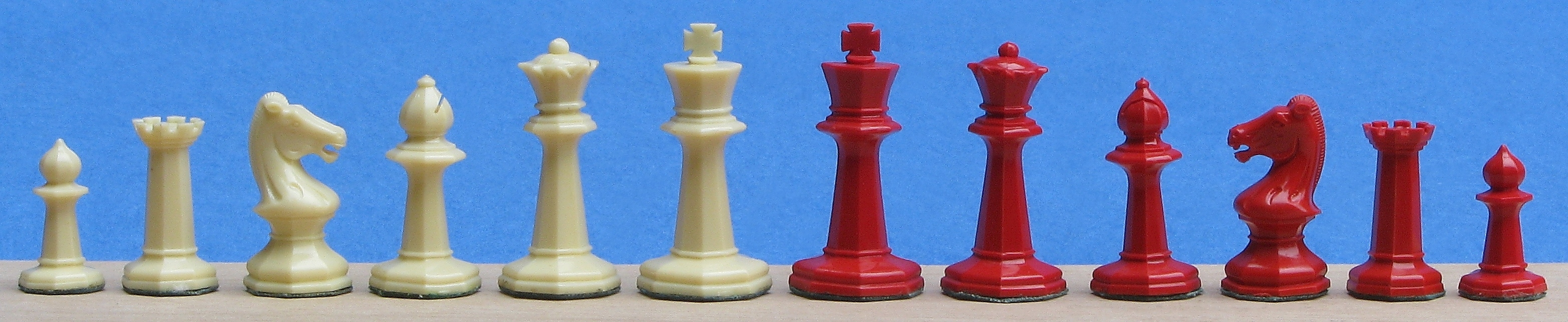
Drueke imported French Galalith sets in the 1920s and sourced American Catalin sets in the 1930s. Patent D128794 was issued by William F. Drueke in 1941 for his iconic 8-sided chessmen. I have seen these Drueke sets, in different boxes, with numbers 20, 22, 23(B) and 24, indicating felted and weighted options. The 8-sided chess sets were made of Tenite (Cellulose Acetate) until 1954, when the switch to in-house polystyrene injection molding was made. My Tenite set was sold by H.Baron Company, New York, in its well known green signed box. They most likely have added the felts under the pieces.
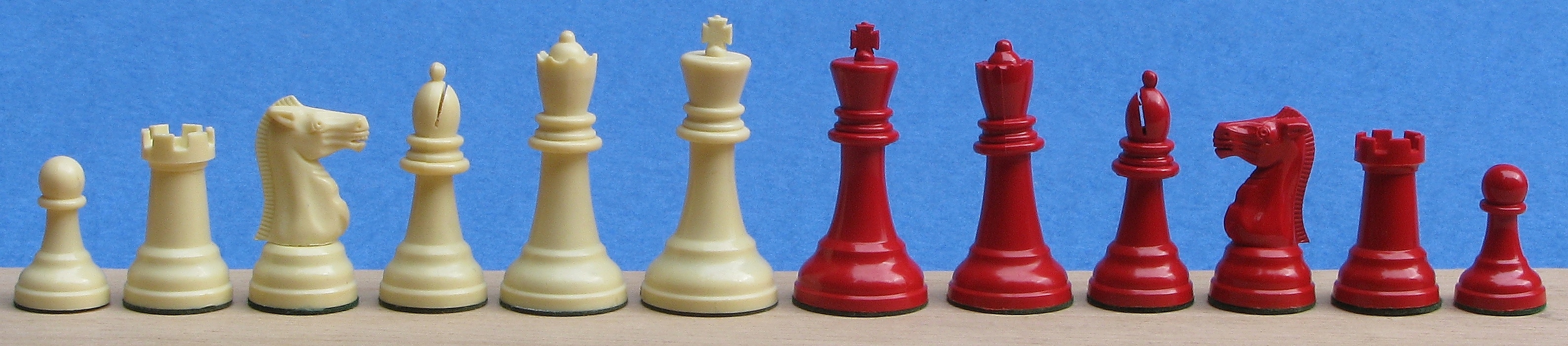
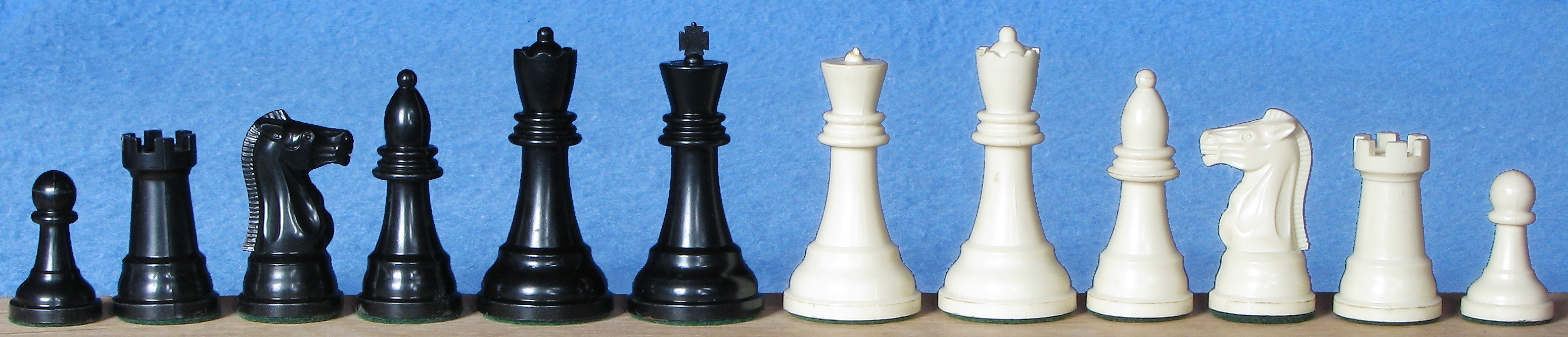
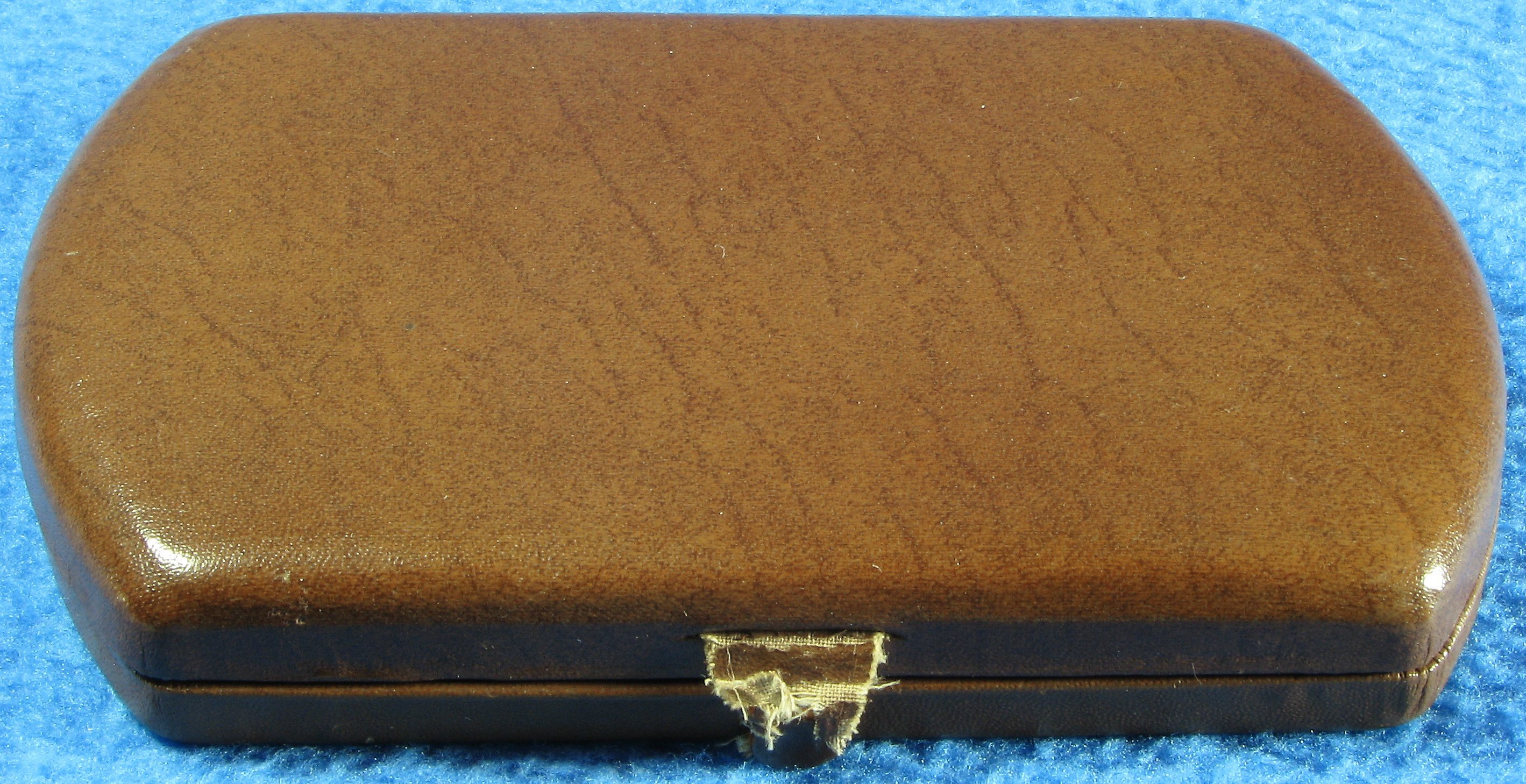
Gallant Knight Co., well known for its logo of a Knight, marketed sets from early 1940s until 1959, when they were taken over by ARRCO, which used the brand until the 1970s. The sets were available in different sizes. Packaging was either a large cardboard box with separate places for the pieces including a cardboard board, known as the combination set, or a leatherette cardboard box with one half sized loose inner box. The sets exist in different colours like white and black or white and red. Also in small variations, due to different moulds and plastics used. Gallant Knight Co. sets in the 1940s were made of Tenite. In the late 1940s they marketed a lighter Tenite set and in the 1950s they switched to polystyrene. My red Tenite set from the 1940s was sold by H.Baron Company, New York, in its well known green box and my black Polystyrene set from the 1950s by Gallant Knight Co. in its leatherette box with logo.
The H.Baron Company is mainly known for it's cribbage boards. It's factory was on Long Island and was taken over by Crisloid in 1972.